
San Jose Sharks
Hoffman, Granlund on Differences Between Playing Power Play Point Instead of Flank (+)

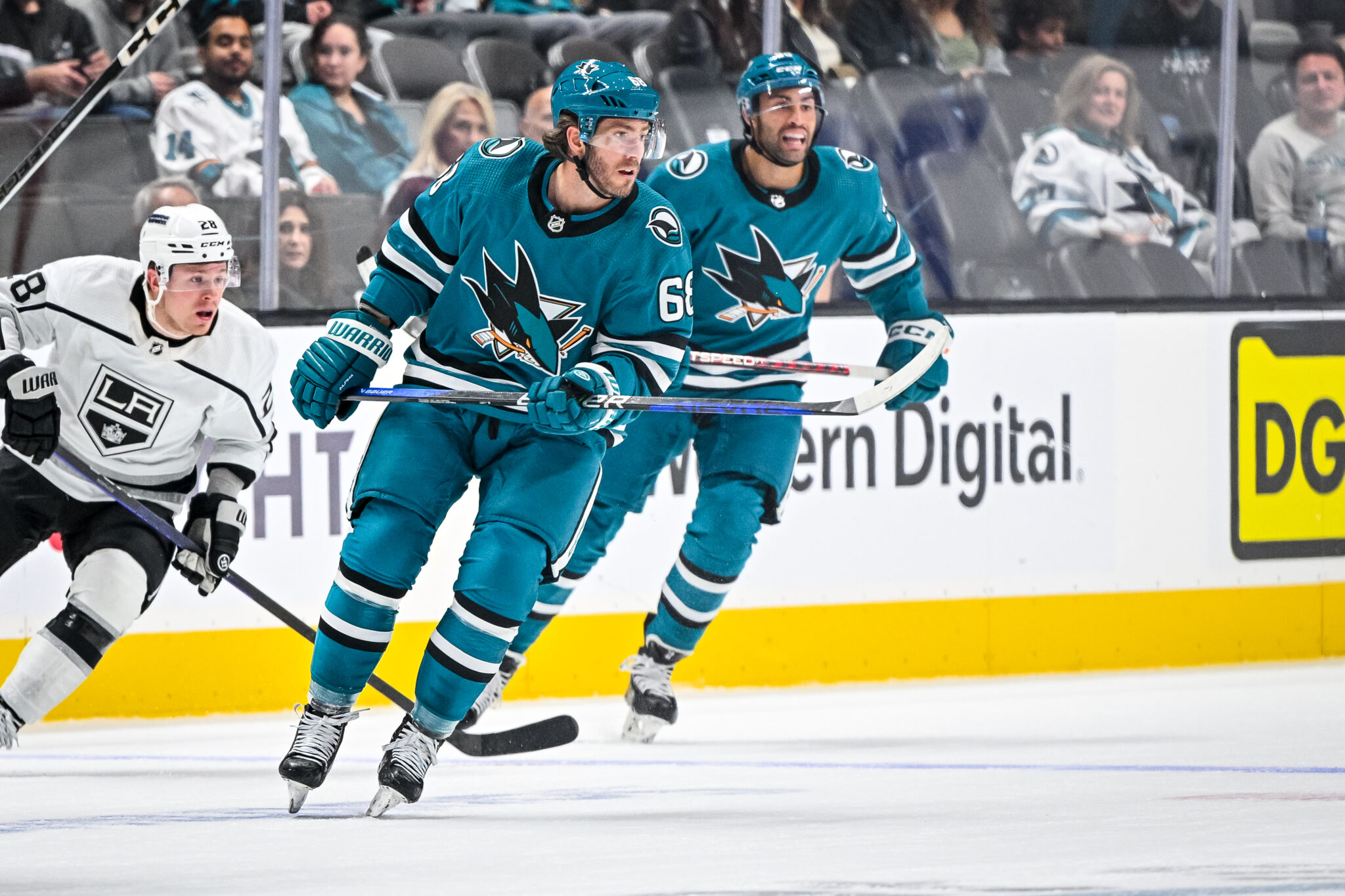
You know what they say about the best-laid plans?
Just one game into the season, the San Jose Sharks have been forced to change up their power play.
Going into the year, the Sharks wanted to try out a five-forward PP1.
Mikael Granlund, stepping into what’s typically a defenseman’s role, was the point man. Left-handers Anthony Duclair and Mike Hoffman occupied the left and right flanks, respectively. Alexander Barabanov took the bumper and Tomas Hertl played net front.
But then, Granlund re-aggravated a training camp lower-body injury during Thursday’s season-opener. He was put on IR, and will miss at least a week, potentially more.
Preview/Lines #2: Granlund Out Week-to-Week, Peterson Recalled
Good thing, Hoffman has played the point on a five-forward power play before.
And in Granlund’s absence, he’s going to get that chance again. Hoffman will man the point tonight against the Colorado Avalanche with William Eklund on the left flank, Duclair on the right side, Barabanov bumper, and Hertl net front.
Last season, Hoffman, then with the Montreal Canadiens quarterbacked a five-forward power play, along with Cole Caulfield, Nick Suzuki, Kirby Dach, and either Sean Monahan or Evgenii Dadonov.
So what’s different about playing the power play point for a forward? Both Hoffman and Granlund weighed in on that question during camp.



SJHN Daily: 6 More Possible Sharks Head Coach Candidates, Case for Don Granato

Zetterlund Going to World Championships, Talks Friendship With Eklund

Vlasic Doesn’t Think He’ll Get Bought Out (It Doesn’t Make Sense Anyway)

Thoughts on 10 Possible Sharks’ Head Coach Candidates

4 Things That Grier Might Be Looking for From Next Sharks Coach? (+)

NHL Scouts Talk Collin Graf’s Ceiling (+)

Don’t Expect Will Smith To Sign With Sharks This Season

Grier on State of Sharks’ Rebuild, Free Agency Plans, Empty Seats at SAP Center & More (+)

Sharks Locker Room: What’s the Organization’s Plan Besides Hoping To Draft Celebrini?

Penguins Miss Playoffs: Sharks Likely To Have Two 2024 Draft Lottery Picks
Zetterlund Going to World Championships, Talks Friendship With Eklund
Vlasic Doesn’t Think He’ll Get Bought Out (It Doesn’t Make Sense Anyway)

REACTION: Quinn Fired!

Ferraro Teases Burns, Excited To Bring Sharks Back to Playoffs One Day

Granlund Will Play for Finland, Talks About Being ‘Dad’ for Eklund & Zetterlund
