
 Sheng Peng

How are the San Jose Sharks going to reinvent their third-from-worst power play?
Training camp has offered its share of clues. Saturday’s season-opening 4-3 victory over Winnipeg offered more.
But as Brent Burns noted, “Jumbo used to say, the analytics and all that bullshit is bullshit.
“Just get a score, right? So you can have a bad power play, you score a goal, it’s a great power play all the sudden.”
For what it’s worth, the Sharks PP connected at a 25 percent clip in the preseason, a far cry from their 29th-ranked 14.1 percent last year. That’s a huge difference: Last season, San Jose scored 22 power goals in 156 attempts. If they had succeeded at a 25 percent rate, that would be 17 more goals over the course of a 56-game season. That’s a big number for a team with a -50 goal differential on the year.
It’s just preseason, of course. But hey, they got off to a good start against Winnipeg, potting two PP goals in five attempts.
Here’s what’s different, bullshit or not, about the San Jose power play.
Simple Entries
Ex-associate coach Rocky Thompson, who ran the San Jose Sharks power play last season, is known as being creative on the power play.
“He’s strong with his power play philosophies. Lots of different breakouts,” Thompson’s ex-Chicago Wolves assistant coach Bob Nardella told San Jose Hockey Now last summer. “Some of the teams we played, not many teams vary with their power play breakouts. But we did. He was very creative with that.
From the beginning, his PP entries were a little more complicated than the Sharks had employed under Steve Spott in the Peter DeBoer era.
Here are the two power play entries that I most associate with the Spott-run PP:

In this case, it’s Erik Karlsson (65) as the quarterback, who drops the puck back to the two forwards coming from behind with speed. The forward who receives the puck usually passes.
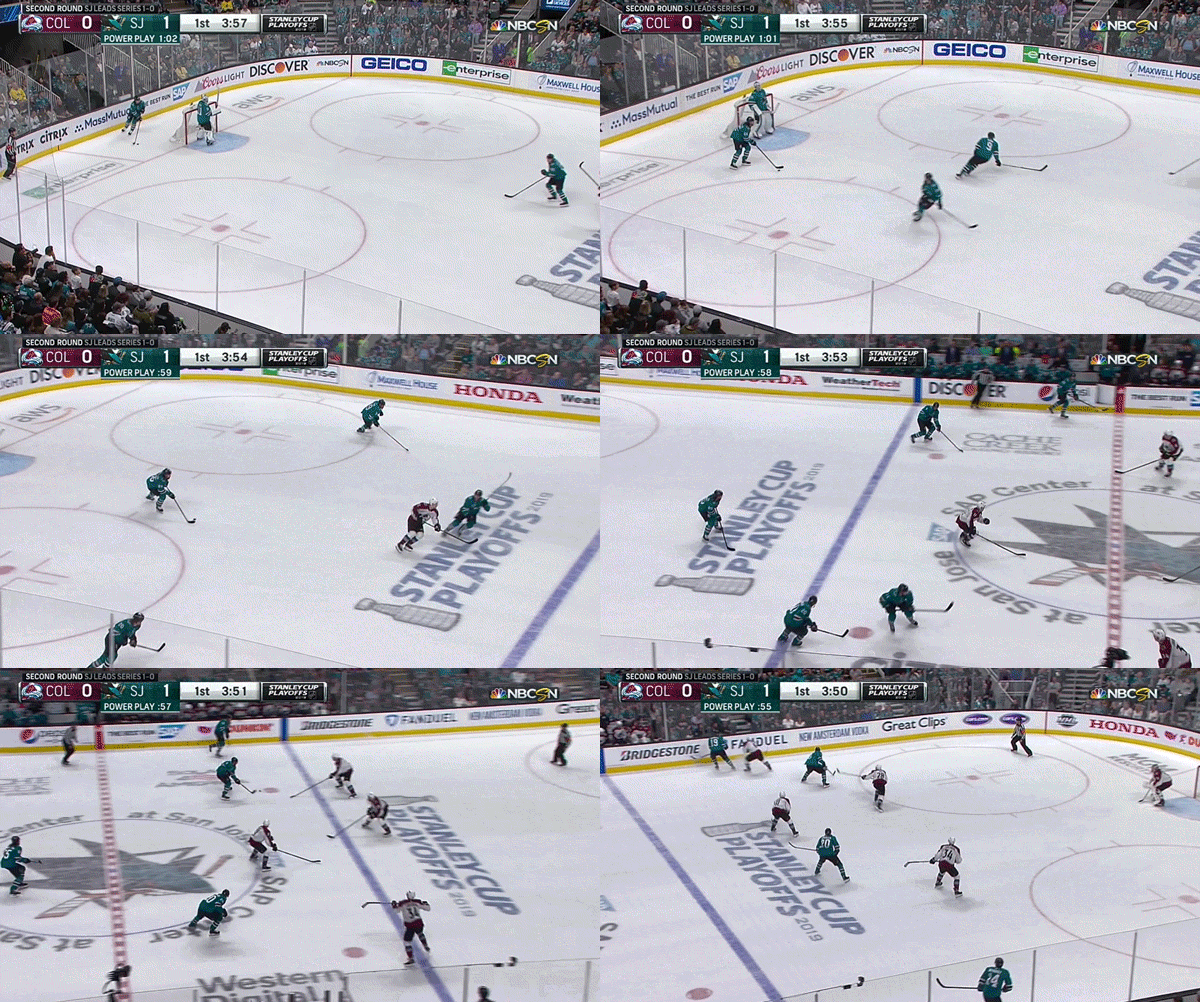
On this “five man” swing, the entire power play unit comes up the ice together — once again, Karlsson is the focal point, as it’s incumbent on him to get the opposition’s F1 penalty killer (that’s the PK’er closest to the puck) off balance, then hit an open Sharks forward in stride with a pass.
This is an example of what Thompson was doing in San Jose — this is from opening night last year:

A drop pass with three skaters coming from behind, and then a double-drop at that, wasn’t something normal for a Spott-led power play.
Nobody is saying that’s why the power play was bad last year — actually, the Sharks did not have too much trouble gaining the zone with control of the puck on the power play last season. Per SPORTLOGiQ, San Jose’s PP Controlled Entry Success % was 63.9 last year, good for 14th in the league. Under Peter DeBoer and Spott in 2019-20, they were 26th at 60.8 %.
But regardless, John MacLean, Thompson’s replacement, seems to going with a more meat-and-potatoes approach:

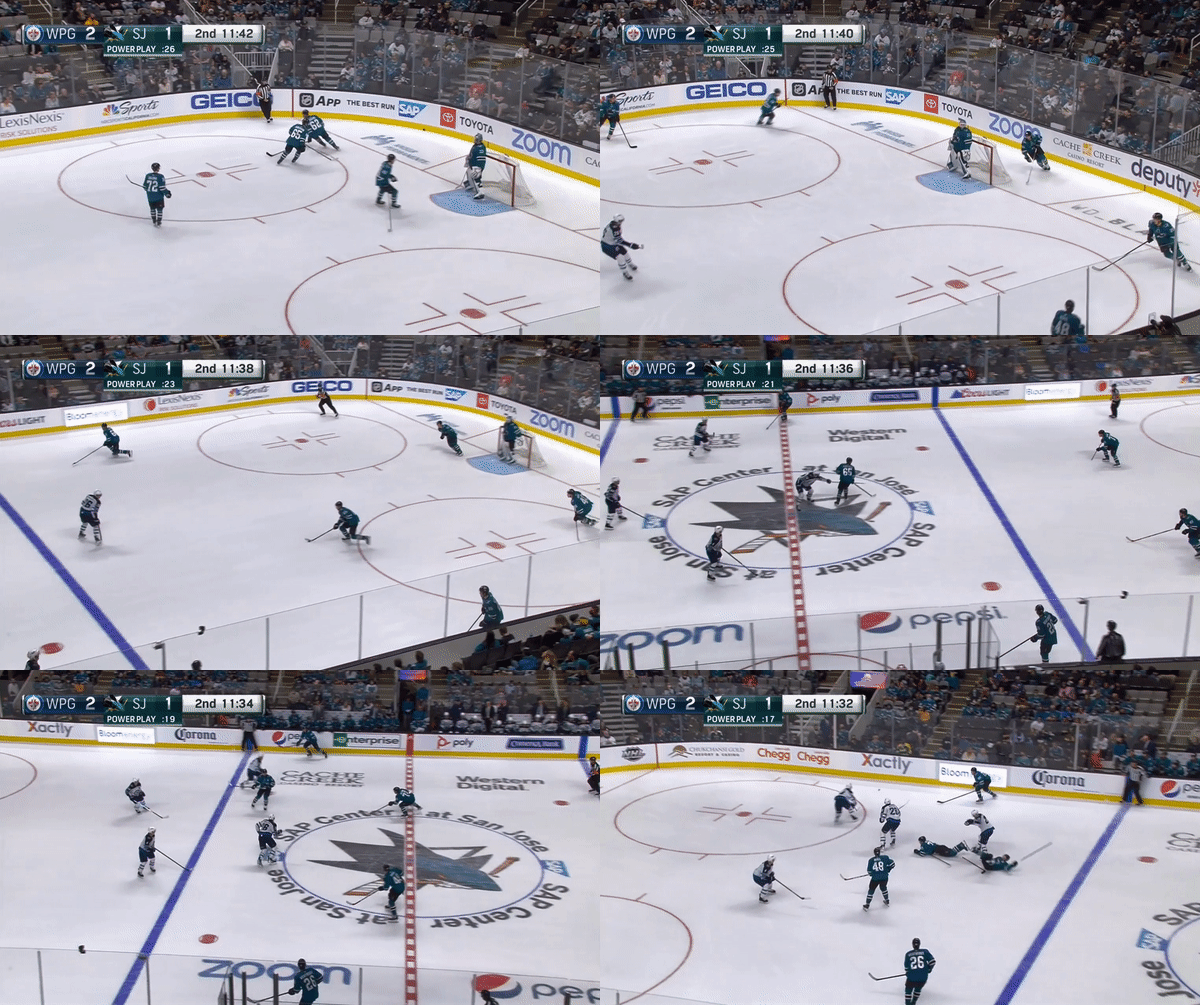
That was on the same power play against the Jets, a simple drop pass, two forwards coming from behind with speed — looks a lot like what Spott was doing, right?
Simple seems to be the buzzword around the San Jose Sharks power play this season.
Burns and Karlsson, Never Again
Since the San Jose Sharks acquired Erik Karlsson in Sept. 2018, there’s been an understandable fascination with pairing Karlsson and Brent Burns on the power play. I mean, from 2010-20, the two highest-scoring defensemen in the league were Karlsson and Burns.
So at the beginning of every regular season since Karlsson’s arrival, the Sharks have dutifully trotted out a PP unit that featured both, to middling results. And like clockwork, by early in the season, Karlsson and Burns were separated and given their own units to lead.
Boughner has had enough with the fantasy hockey thinking.
“Both guys, we’ve experimented with them on the flanks. There’s no secret that both of them are better up top, that’s where they’ve spent a lot of their careers. Two guys can’t be in that role,” he said, before declaring, “The experiment’s over, really. It is. It just hasn’t had any success. And they understand that too.”
Shot Mentality
Analytics may be bullshit, but the numbers don’t lie: The San Jose Sharks were just firing away on the power play in the preseason.
Per Natural Stat Trick, they were third in the league with 114.65 Shot Attempts Per 60 at five-on-four. Shot quantity seems to trump shot quality.
“It’s about the unit of five and what everybody else is reading off. If everybody’s thinking shot, everybody’s working downhill towards the net, it gives everybody sort of a guideline to go by,” Boughner offered. “But if one guy starts overhandling it and we start trying to be too pretty up top, you’re sort of freezing out everybody else.
“I think it’s about quick puck movement, shot mentality, and it doesn’t matter if it’s [Karlsson or Labanc] or anybody, we want to get pucks to the net. That’s a buy-in.”
Captain Bumper
We haven’t really seen Logan Couture play the high slot or the bumper position on the power play recently.
But that’s what he played all preseason, as the San Jose Sharks searched for a fresh PP formula. They also tried Kevin Labanc at the high slot and Lane Pederson net front, neither which took.
I think the Couture experiment should work though: Your high slot presence should be quick to the puck, able to anticipate where it’s going, and distribute it in traffic if need be. It’s a high hockey IQ person, which sounds exactly like Couture.
“That area, you’re always the supporting guy, you’re kind of following the puck around,” Couture said, not disagreeing. “You got to see where the openings are, you got to follow and be the support for the four other guys on the ice. And when you get it, you gotta distribute to the right spots. Hockey IQ is very important there.”
Eklund Effect
William Eklund had an immediate effect on the preseason PP.
Eklund’s natural deceptiveness with the puck — where’s he going to go with it, left or right — and his ability to execute pinpoint passes when he’s made up his mind, often bought his teammates that extra split-second with the puck. Giving your teammates more time to make good puck decisions has a cascade effect: It’s fair to say that Eklund made the entire power play better by creating time and space for his teammates.
We didn’t see this immediately against the Jets — Winnipeg was doing a terrific job of standing up Eklund on drop pass entries — but then in the final frame, Eklund created space for himself and made magic:
That little head fake on Adam Lowry (17) opened up a world of space for Eklund, which led to Hertl’s goal.
We’ll see if the San Jose Sharks’ torrid power play pace keeps up. Remember opening night last year? 4-3 Sharks win, a promising rookie puts up two points, the power play gets on the board. That was in Arizona, John Leonard, and that PP exploded to a 5-for-11 start before suffering a season-long implosion.
“[We had] reports from projects and analytics, really keyed on the top power plays in the league and what they’re doing,” Boughner said of this off-season. “We’ve come up with three or four simple things, a little bit of change from what we were doing before, and hopefully, that pays off for us.”
So hope springs eternal for the San Jose Sharks power play. Will the well go dry once again?