
 Sheng Peng
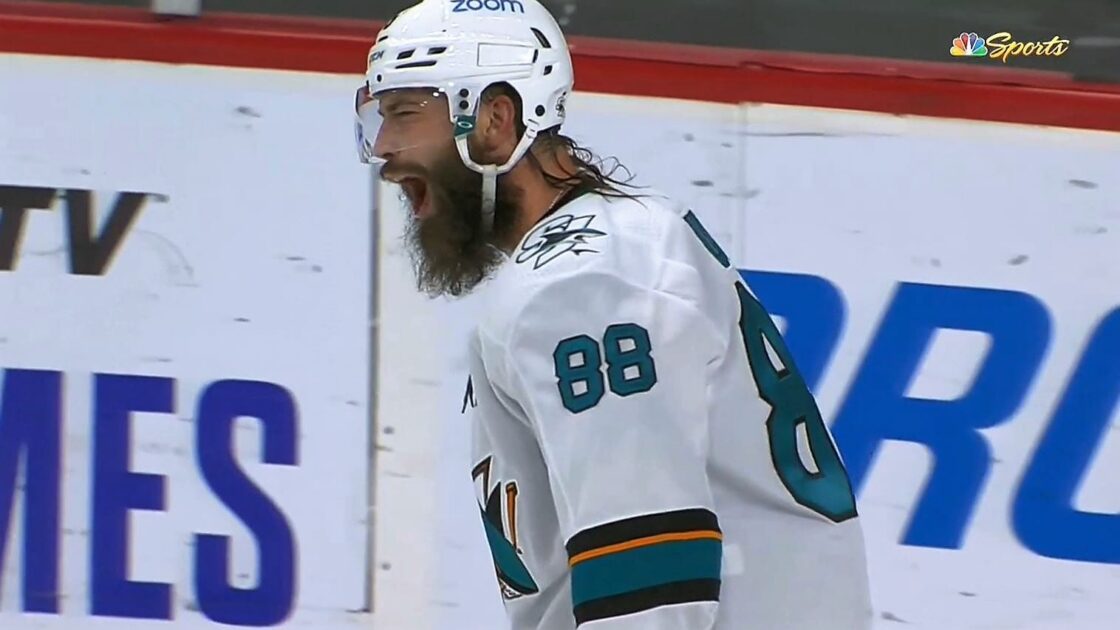
It’s not just about the goal.
And for Brent Burns, it’s not just about the offense.
Every season, it’s the same rumblings: Burns can’t play defense. The San Jose Sharks should move him back to forward.
Safe to say, the team disagrees.
“I thought he’s had a real good start to the season,” Bob Boughner said yesterday. “His defensive game doesn’t get enough credit. It really doesn’t. People talk about his defensive gaps. I think he’s playing great defensive hockey right now.”
So what are the Sharks seeing?
I re-watched all of Burns’s shifts in yesterday’s 5-3 victory over the Minnesota Wild to highlight the good and the bad.
My conclusion: Burns was a high-impact defenseman last night. And there’s no reason whatsoever to move him up front if he can keep it up.
I should note that I basically wrote the same article two years ago — I also watched every shift of another Burns game — when he was in the midst of a Norris Trophy finalist campaign. A year removed from his least productive San Jose campaign as a blueliner, his two-way game is certainly worth re-examining.

Erik Karlsson, deservedly so, is much lauded for his ability to be a one-man breakout machine. And while Burns isn’t quite Karlsson in that category, his skating, size, and stickhandling give him the ability to push play the other way by himself too.
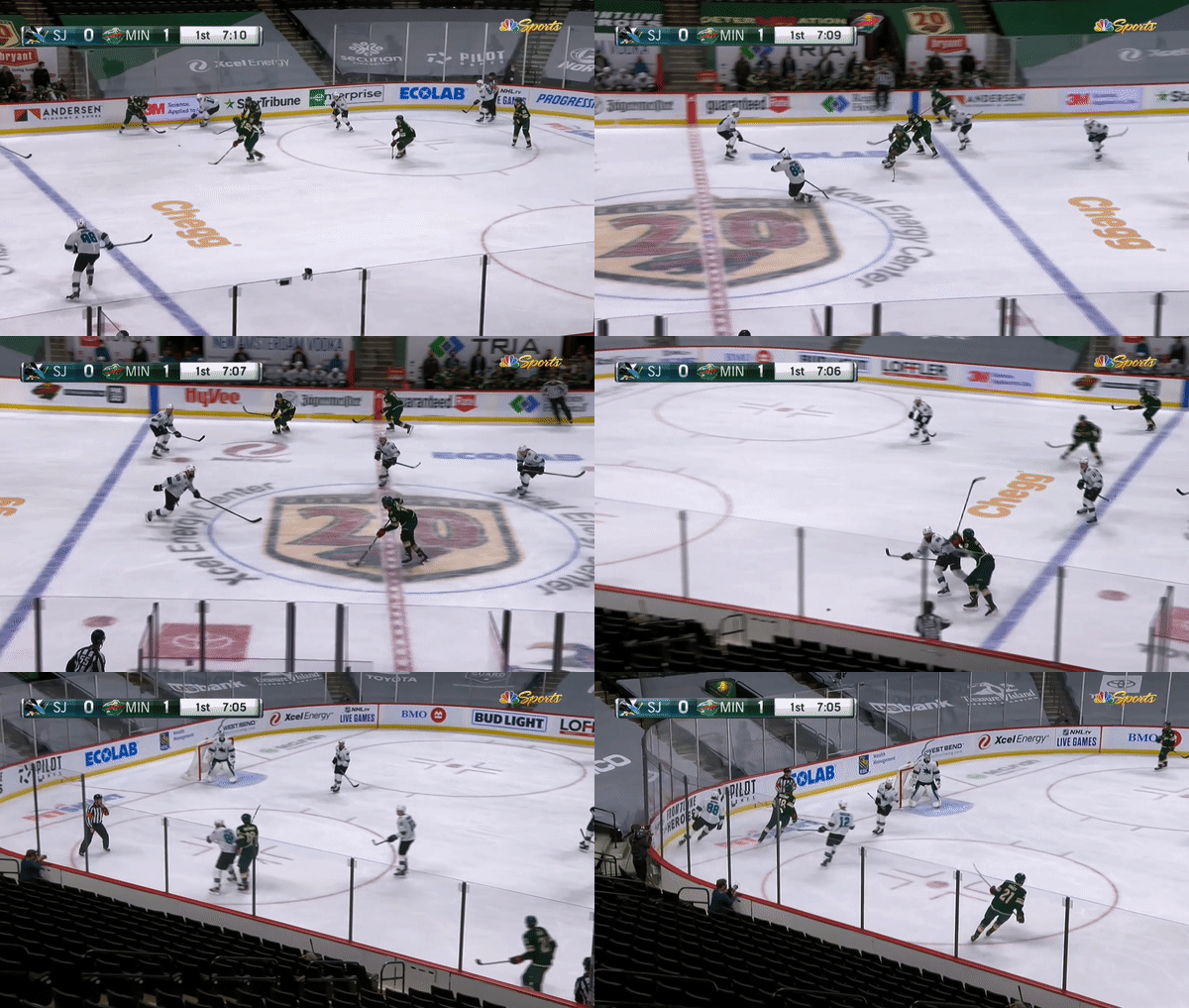
Burns sashays through Ryan Hartman (38), Victor Rask (49), and Carson Soucy (21), puck on a string. This is more than just pretty: By leaving three Wild players in the dust, the middle of the ice opens up for the Sharks on entry.
Kevin Fiala (22), on the backcheck, takes it from Patrick Marleau (12), but that’s three zones of one-man offense from Burns.

Burns has some very obvious physical attributes that make him tough to beat defensively: He’s 6-foot-5, very mobile, and he’s learned how to use his stick as a weapon.
As the very dangerous Kevin Fiala (22) enters the zone, Burns is able to match speed, keep a tight gap. Burns’s stick is held toward the middle of the ice, trying to steer Fiala to the outside.
Fiala’s too good for that though, and tries to dangle toward the middle. Burns tries to bat it away, and while he doesn’t quite get to the puck, Fiala fumbles. Burns closes and Fiala is forced to attempt a wild shot from a bad angle.
It’s not exciting, but basic stuff like this has made Burns tough to beat one-on-one.
Even when Burns loses his gap, as he does here at center ice against the big, fast Jordan Greenway (18), he’s able to recover and force an offside.
In a dazzling shift, Burns makes three consecutive stretch passes that break the San Jose Sharks into the zone:
00:01 Burns hits Dylan Gambrell (7), then Gambrell gives it back.
00:15 This time, Timo Meier (28) gets the sauce. It’s a hard pass — a Burns specialty — so Meier can’t handle it clean, but he does settle it down. Minnesota is able to push it out to Burns.
00:31 On the move, Burns rifles it off the wall and into Meier’s wheelhouse. This leads to a solid Noah Gregor (73) chance.
Burns isn’t going to complete every stretch pass — per SPORTLOGiQ, he completed 64.3 % last season — but when he’s on, he’s on. Just for comparison, by the way, Nate Schmidt led the NHL with a 74.5 Stretch Pass Success Rate % (among 22 defensemen, 200 or more 5-on-5 stretch passes) — Karlsson had a 59.3.

Another world-class play: Ryan Donato’s (16) low-to-high pass is into Burns’s feet. But the defenseman is able to kick it forward to himself, then pull the puck back to the edge of the blueline — to evade the stick of Marcus Johansson (90) — and drive it toward Marc-Edouard Vlasic (44).
It’s a small but incredible feat which opens up, for a split-second, a San Jose 4-on-3 below the blueline. That’s creating offense out of nothing.
Three good-to-great Burns’s plays highlight this shift:
00:00 Fiala is at a standstill and Burns doesn’t let him get started, using his long stick and quickness to bat away the puck and deny entry.
00:10 Fiala crowding him on the forecheck, Burns fires a bullet backhand outlet pass to Matt Nieto (83). That’s a high degree of difficulty and a real challenge for a forechecker, who can’t guess to go left or right.
00:25 Here’s some valuable patience from Burns. One of the misconceptions about the three-time Norris finalist is that he shoots indiscriminately.
Instead, consider the number of factors that he has to calculate at any given moment when he has the puck at the blueline: How much time does he have? How much incoming pressure? And as we see here, are there San Jose sticks or bodies to aim for?
Burns waits out the Wild and Nieto beats Jonas Brodin (25) to the front for a very intentional high-danger deflection.
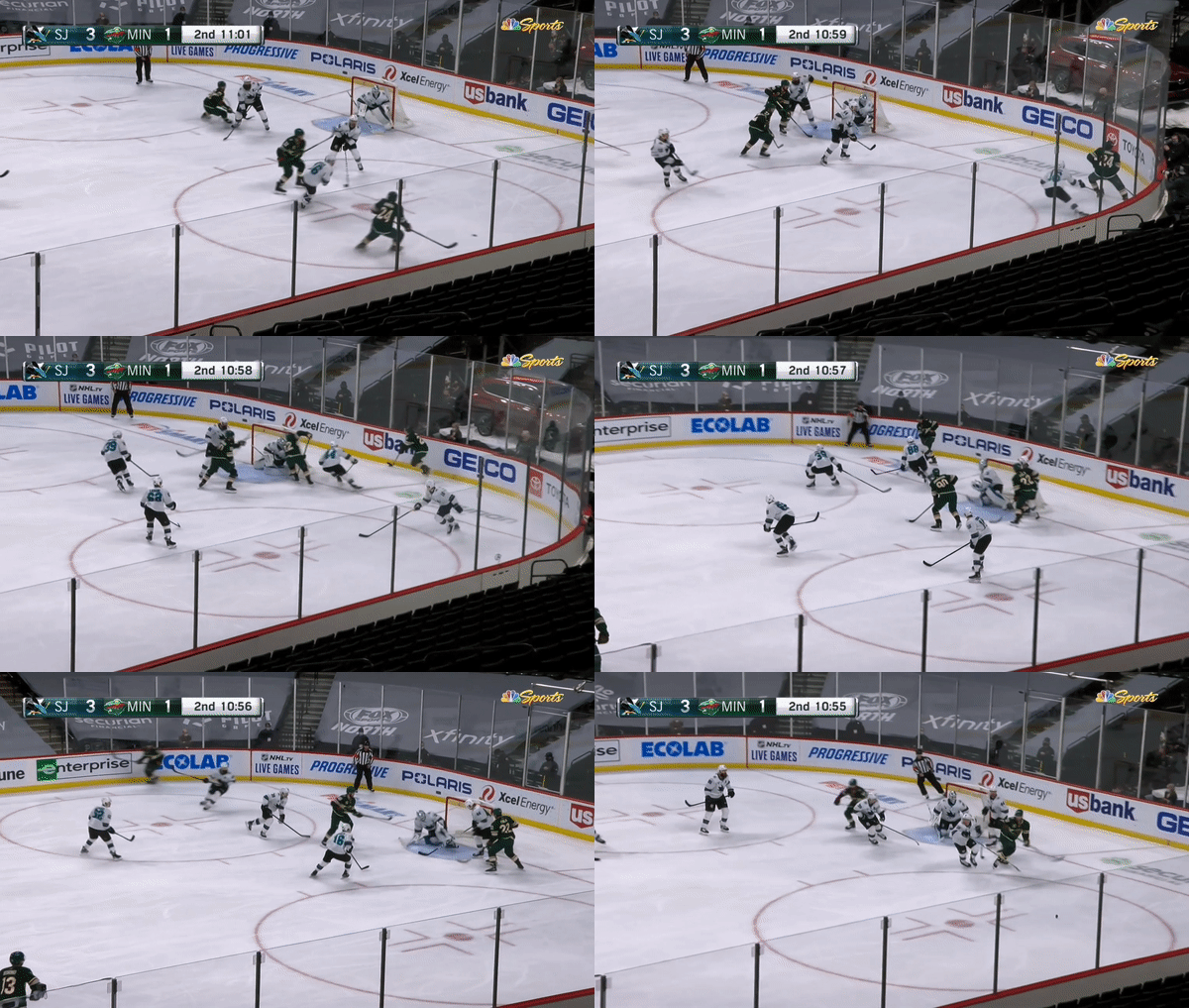
I’ll say, in my observation, that Burns does have trouble from time to time being too aggressive and not properly sorting out defensive coverage.
This isn’t a clear example of that, but Burns or Logan Couture need to figure out who’s taking Matt Dumba (24) circling the net and Johansson in front.

At his best, however, Burns’s aggressiveness is a lot more good than bad.
Burns’s length and own trust in his ability to recover allow him to step up on Kiril Kaprizov (97) — if there’s anybody you want to stop from building speed on the Wild, it’s the Russian rookie, right?
Burns’s step-up is like a domino effect, leading to the puck going the San Jose Sharks’ way.
Joel Eriksson Ek (14) follows up after Kaprizov, but the Burns-created disturbance allows Gregor to catch up on the backcheck. Because of Gregor’s pressure, Eriksson Ek has to hurry a soft backhand pass. This allows Vlasic, in turn, to step up on Zach Parise (11) and decisively turn the puck away from the San Jose zone.

There aren’t many players in the NHL bigger than Burns, but 6-foot-6 Nick Bjugstad (27) is one of them. But watch the front of the net: Burns boxes out Bjugstad, giving Martin Jones a clear view of the shooting lane.
Meier manages to block Kaprizov’s shot, but this pure strength is certainly an underrated defensive skill of Burns, and something that makes him a valuable asset on the penalty kill.
That’s worth noting too: Burns has been an integral member of the league’s third-best penalty kill from 2015 to now. That’s not somebody who can’t play defense.

This looks awkward, but once again, Burns’s length and quickness make things uncomfortable for a top Minnesota forward. Kaprizov tries to shovel a soft feed through, but Burns is able to end the play.
Look, I’m not trying to say that Brent Burns is the second coming of Rod Langway. If you believe defense is just defense, there are a lot of better defensemen in the NHL than Burns. But truth is, defense isn’t just defense. You can have a blueliner who’s unbeatable one-on-one, but if he can’t make a first pass to save his life, you’re going to give up a lot more goals than you score. You have to consider the entire package.
As a pure defender, Burns experiences many highs and lows because of his immense physical gifts, and at times, overaggressiveness. On the balance, I think he’s average defensively. But coupled with his truly rare offensive skills, he’s a high-impact, one-of-a-kind defender.
If Burns loses some of his mobility — which is quite possible, since he’s 35 — then perhaps it will be time to move him back to forward. But at least last night, Burns’s skating and skills appear very much intact.