
 Sheng Peng
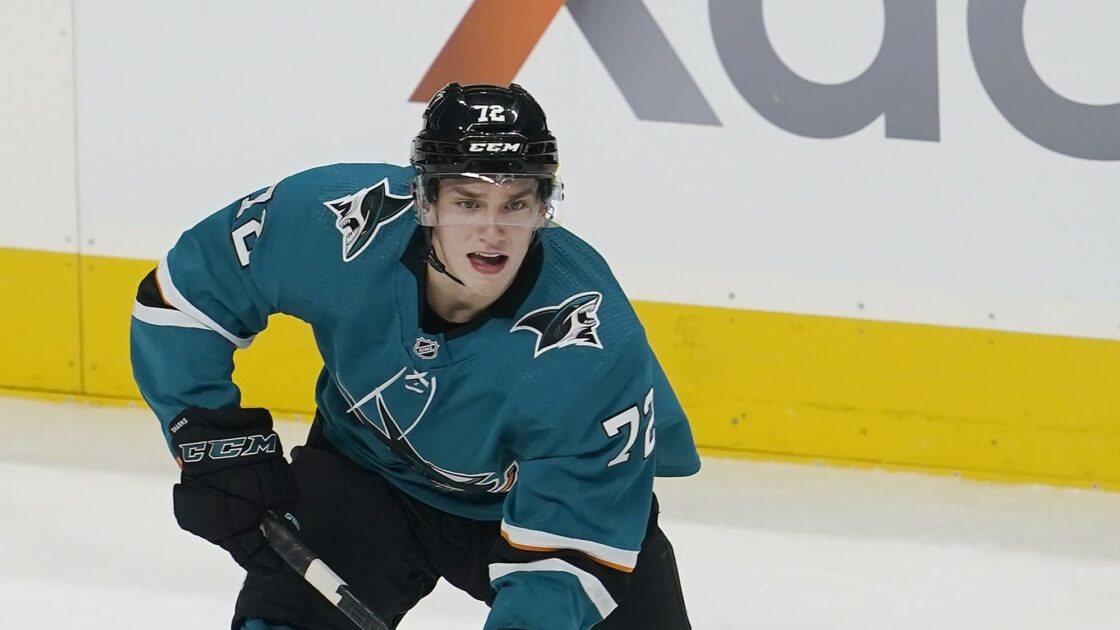
Imagine getting to study game film with a 19-year-old Erik Karlsson.
Learning from a future master of the game, who’s just coming into his full powers.
That’s what I thought about when I got a chance to sit down with 2021 first-round pick William Eklund — before he got re-assigned — and break down his game tape.
Not to put that kind of pressure on Eklund — his San Jose Sharks teammate is a future Hall of Famer — but the 19-year-old winger, like Karlsson was, is a hockey prodigy with a singular way of looking at the game.
“I’m just trying to play my game,” Eklund offered, “just create some space for my teammates.”
That’s what he did, despite notching just four assists in nine NHL games and getting sent back to Djurgårdens.
Eklund is back in North America now, gearing up for the World Junior Championships with Team Sweden.
So what did this hockey prodigy see in his first encounter with the best league in the world? Eklund examined his play, good and bad, with San Jose Hockey Now.
The First Point
William Eklund’s first NHL point was typical Eklund.
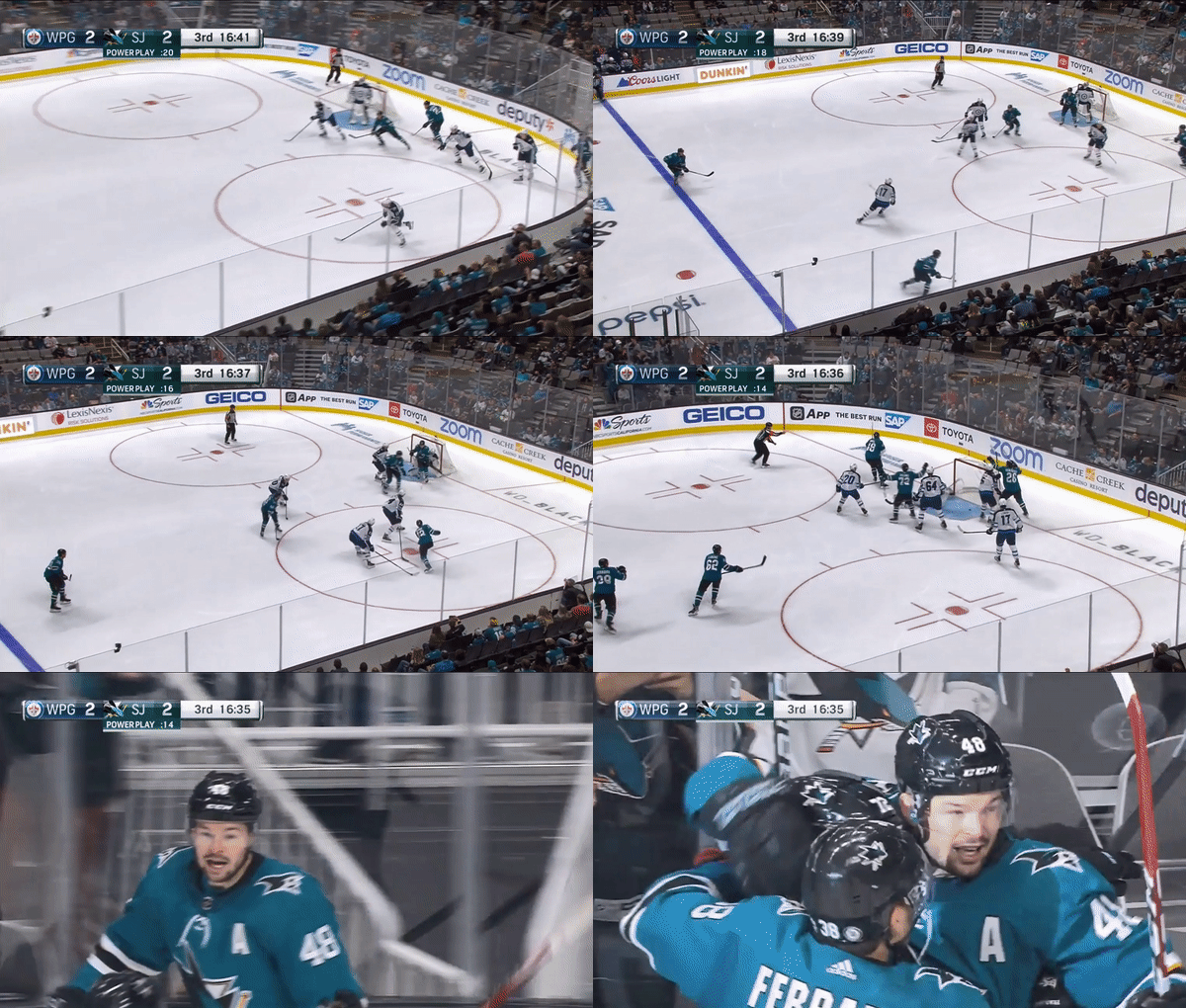
It’s subtle: But how did Eklund (72) leave Adam Lowry (17) up high, a step behind?
Lowry, by the way, is a veteran penalty killer: Since his 2014-15 rookie season, no Jets forward has played more minutes short-handed.
“I just want to shake him off. Trying to [make him] think that I’m going inside to Mario,” Eklund shared. “You just try to look there, get his feet in the wrong way. Because I know if he’s gonna take that turn, it’ll go bad for him, and I’ll create some space for myself.”
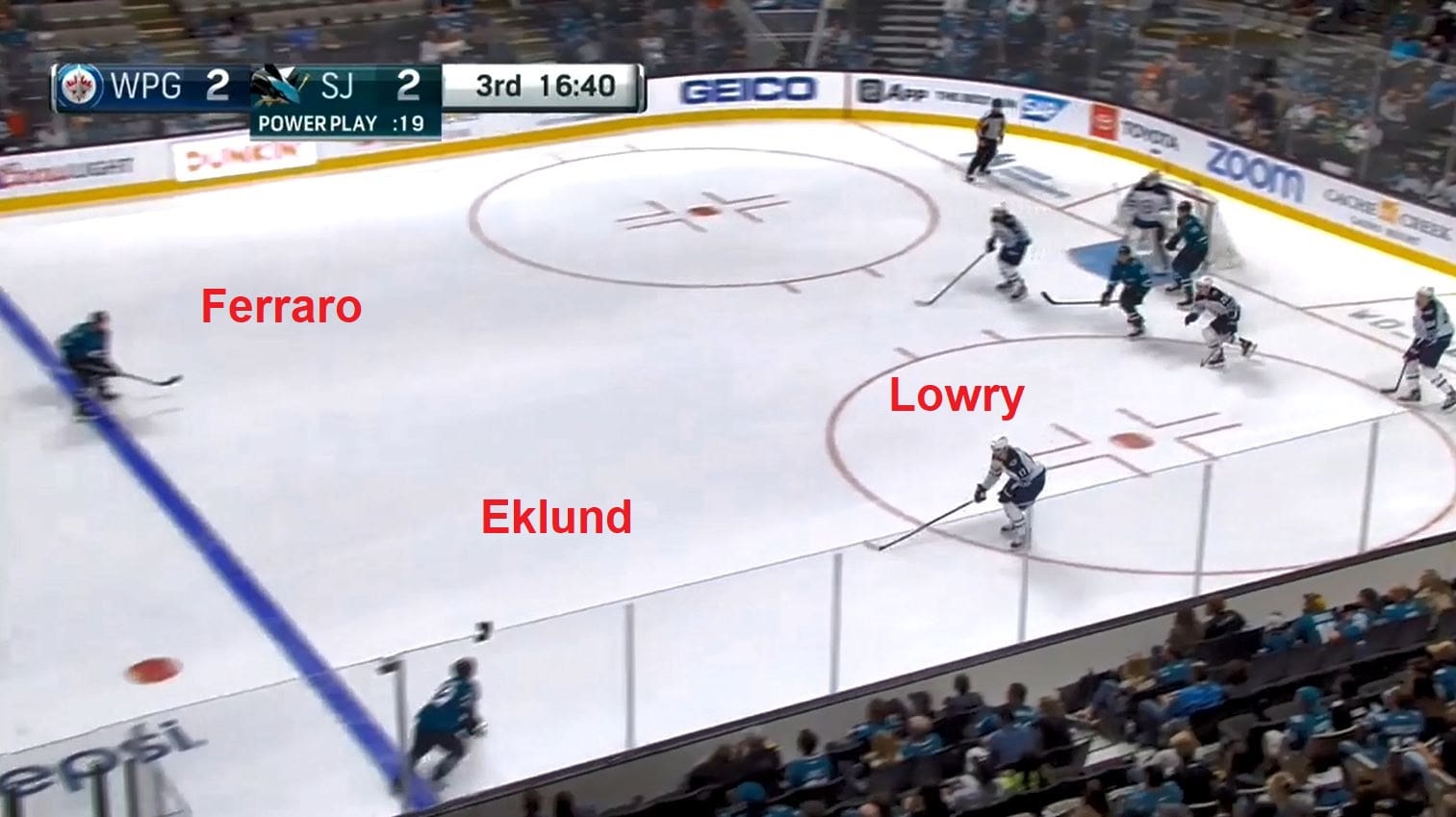
Right here?

“Yeah, exactly,” Eklund said. “Then eventually just walk down the half-wall. I see that we have an advantage there, two-on-one in front of the net. Just trying to get the puck there. And they won the battle.”
Playing the Preds
In Eklund’s oh-so-short run with the San Jose Sharks, perhaps his most memorable performance was in Nashville on Oct. 26, just his fifth NHL game. He went without a point in a 3-1 loss to the Predators, but his blank scoresheet was through no fault of his own.

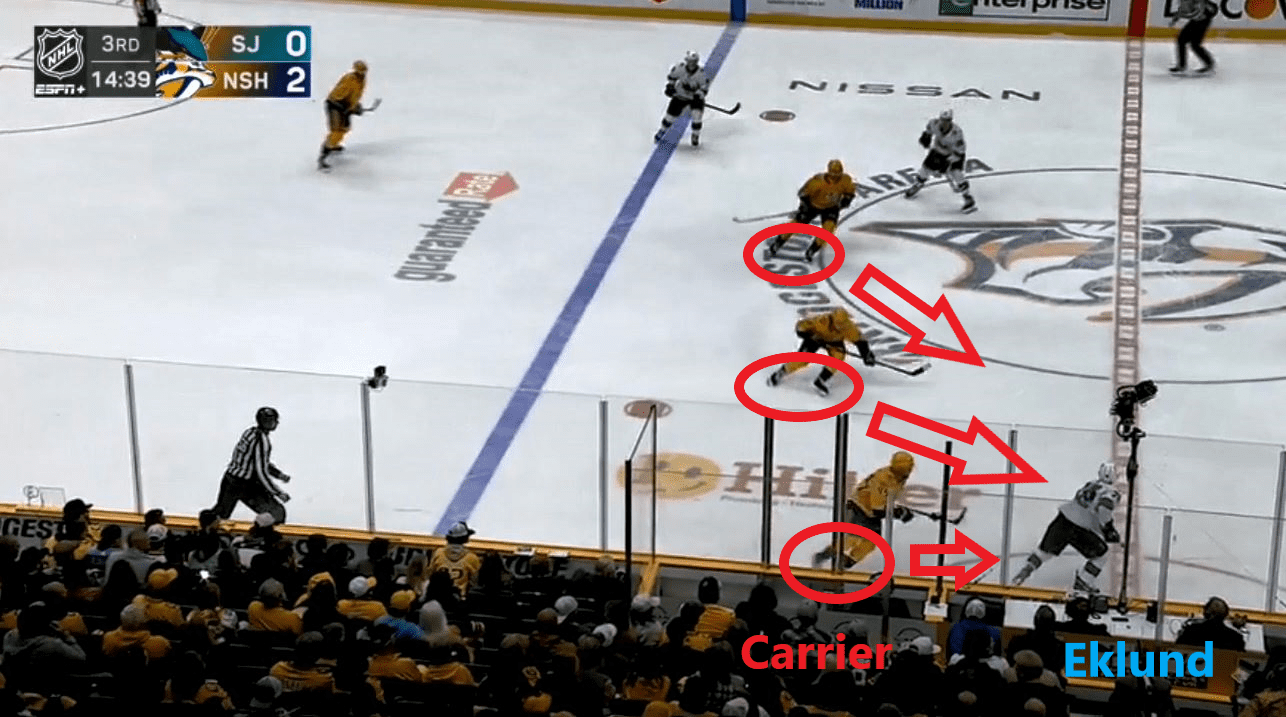
“I see Tommy driving through the middle. I just saw him in the beginning,” Eklund said. “I see two guys coming to me. Trying to shake them the wrong way. Get a split-second in my favor.”

Eklund lures in F1 Luke Kunin (11) by skating backwards — and when Kunin commits, the 19-year-old springs forward. It’s a outstanding example of combining powerful skating with misdirection.
“I’m creating space for myself,” Eklund said. “If I just walk right up, he will eventually get up there and track me. My goal here is to make some separation.”
Next, we have a play that made me a fan for a second.
Personally, that’s a big deal: I pride myself on being an objective journalist. As they say, there’s no cheering in the press box. But this play was so singular, I audibly gasped as I was watching it — good thing that I was watching this from home and not in the press box.
William Eklund revealed his Eureka moment: “Here I see it.”

“They’re thinking that [Jasper Weatherby and Alexander Barabanov] are going here. Their forwards think that I will drop the puck, [they’ll] get a three-on-two or something like that.”
Basically, Filip Forsberg (9) and Mikael Granlund (64) believe they’ve walled off Weatherby (26) and Barabanov (94) from Eklund.
“If I turn here, they’ll cheat a little bit,” Eklund said. “Three other guys, when I’m pulling back, they turn their skates.”
“I’ll get the bounce on the boards here,” he said. “It’s pretty much the same as the other ones. I just wanted to fake them to go the other way.”
Another Near Miss
You have to wonder, if William Eklund earns assists off those world-class passes to Hertl and Weatherby, would the Sharks have kept him? If you think that, here’s another near-miss to keep you up at night.

What caught my eye in particular here was what Eklund did on entry.

Why does Eklund step toward the middle on gaining the zone? It wasn’t random.
“It’s about creating space for myself here,” Eklund said. “Going one way and then going the other way to fake them. Because if you just go in a straight line, they’re going to have you. Just trying to create seconds for myself.”
Eklund also leads Ben Chiarot (8) into Rudolfs Balcers (92) — so Eklund creates a pick out of nowhere.
So when does Eklund decides to pass to Balcers?

“When I see the other defenseman going with him, I know it’s the right play,” Eklund said. “Because I know Rudy is going to be first in front of the net.”
That’s Jeff Petry (26) chasing Balcers. It’s the right calculation: Balcers is ahead of Petry on the turn. If Petry had cut to the front instead, Eklund might have refrained.
What Got Him Sent Back?
Of course, Eklund isn’t in the NHL right now for a reason. For all his brilliance, there were the plays that led to Sharks management re-assigning him.
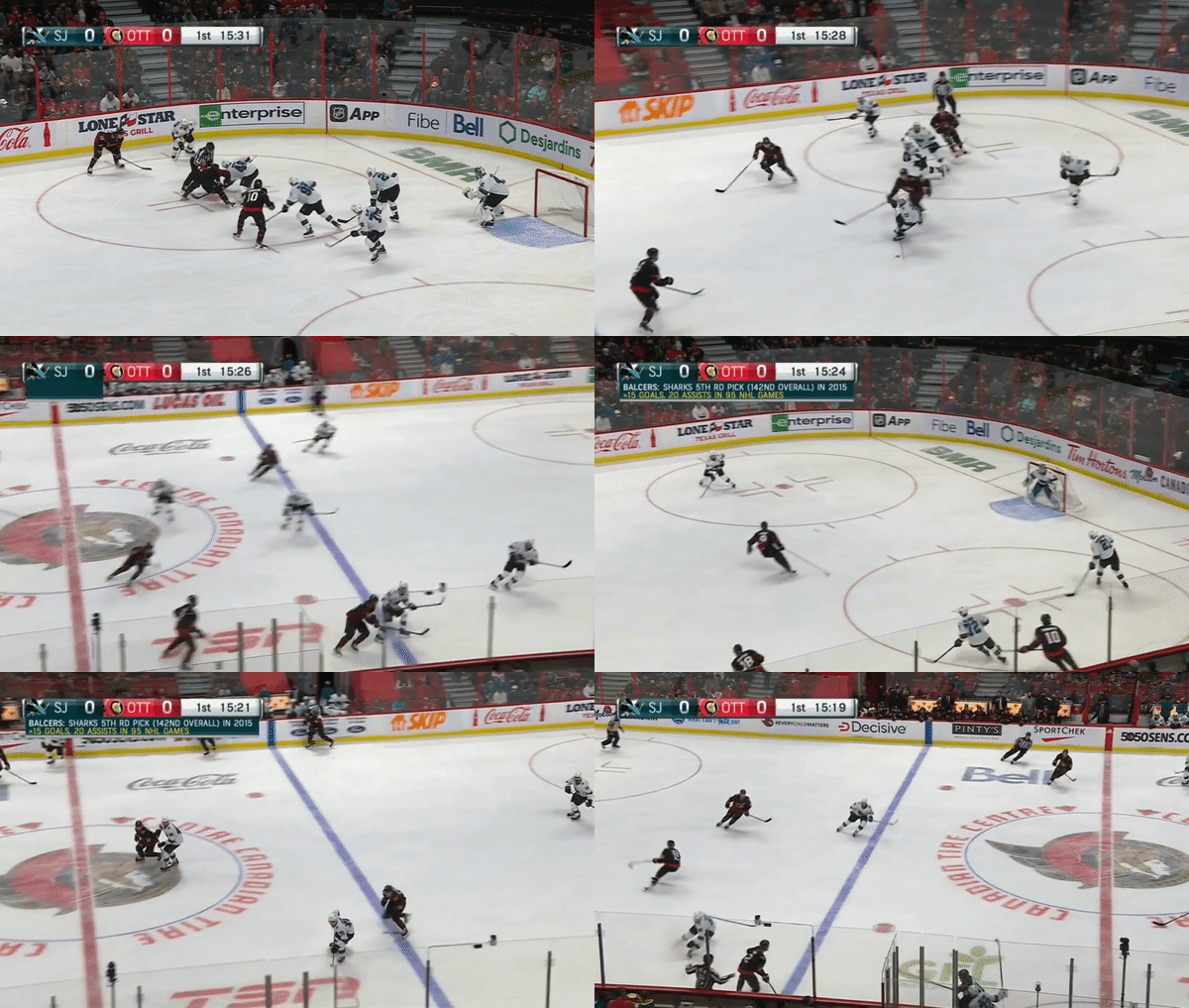
“It’s hard for me to really skate through those guys. This guy has more speed,” Eklund acknowledged. “I want to just fake them to go that way and then go back. Because I know that he has to stick here. But the puck slipped up.”
Eklund is a fine skater, but he certainly could use a little more explosion, a little more separation.
Here’s an example, however, of Eklund using the other team’s speed against them.
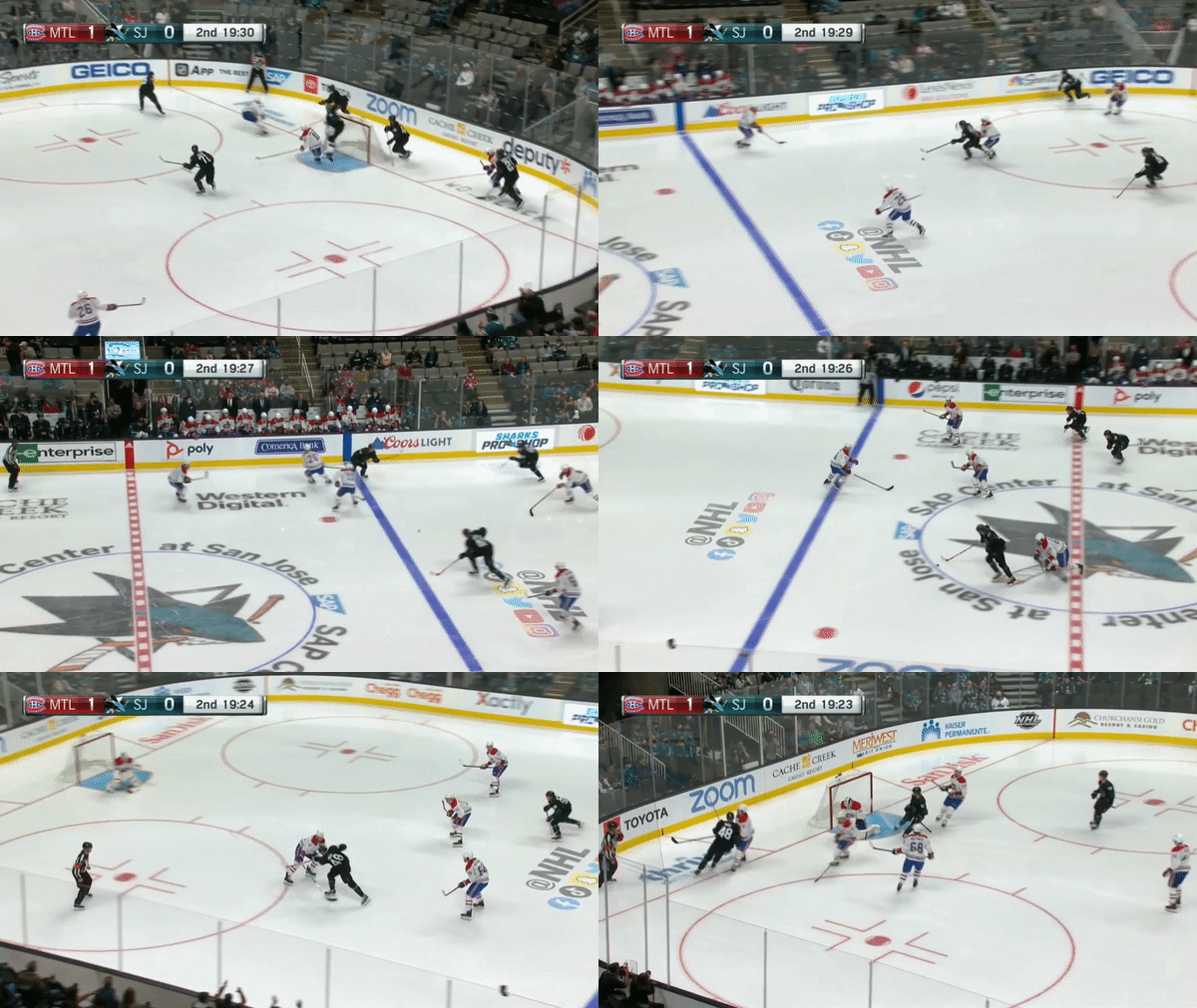
But granted, that’s not an easy play to replicate over and over again.
The five-foot-10 Eklund could also definitely bulk up. Here’s a play where a little extra strength could have gone a long way.

Eklund can’t handle the exit pass and Sami Niku (15) pounces on the flub. The 6-foot-0 Niku is far from being the most intimidating presence on the ice, but he’s able to bump Eklund off the puck. Cedric Paquette (13) throws it back in and the Sharks lose ground.
To his credit, Eklund tried to eat the puck for as long as possible: “I know that some guys are gonna come at me. But thing is, keep it against the boards, so I can get my teammates to come back. Because I don’t want to lose this puck too soon.”
He noted, however, that in the SHL, the forechecker (Niku) wouldn’t be on him that fast.
But all in all, Eklund’s first foray into the NHL was a success. Big plays and small, he looked, by and large, like an NHL’er.
Here’s a small play, my secret favorite, and an example of an intelligent skater who’s just as smart with his details as he is with splash plays.
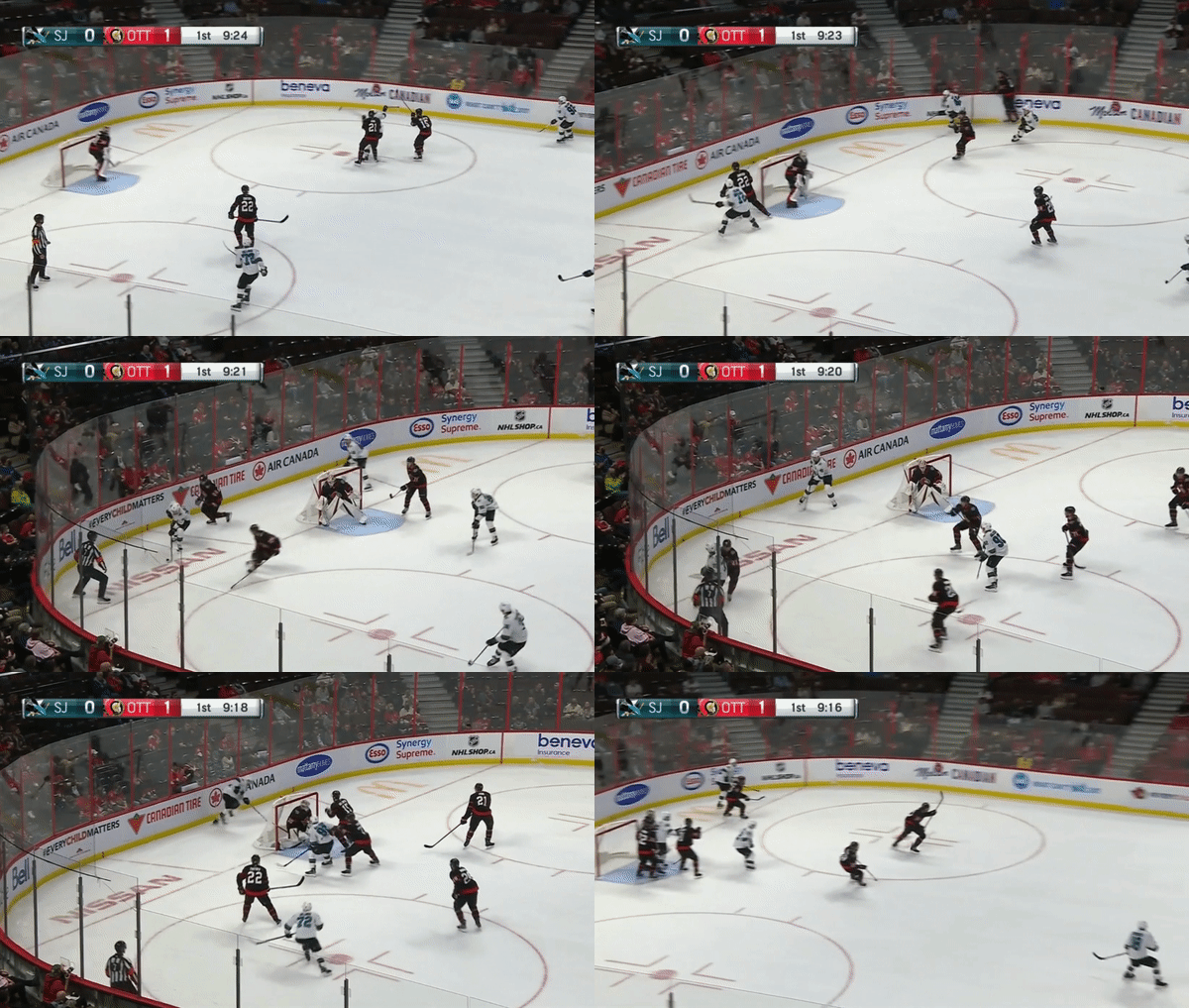
How does William Eklund take the puck so effortlessly from the much bigger and stronger 6-foot-2 Nikita Zaitsev (22)?

“I know his stick is up in the air here,” Eklund disclosed. “It’s hard for him to make [a play] if I just give him a little quick check here. The only way for him to stop [the puck] is with his skate. But if you stop it with the skate, you still have to get the stick down.”
So should the Sharks have kept Eklund? I think so. In my mind, he has the vision and smarts to overcome his deficiencies in size and strength, and he was one of San Jose’s best-nine forwards in his time in teal. And they clearly need all the help that they can get up front, burning an entry-level contract year be damned.
As for his long-term development, as Eklund said himself, “If you want to be better, you got to watch the best.”
It’s plays like this one against Zaitsev that make me confident in Eklund’s NHL present and future: He’s more than just a one-trick pony.
Anyway, all this didn’t keep San Jose from sending him back to Sweden — but it should be more than enough to get Sharks fans excited for the William Eklund Experience, coming soon, for real.