
 Sheng Peng
OTTAWA – According to David Quinn, there’s a difference between “good hockey” and “winning hockey.”
“We play a lot of good hockey,” the San Jose Sharks bench boss said at the outset of this road trip, “we need to play winning hockey.”
The stats bear out Quinn’s argument, to some degree. Per Natural Stat Trick, the Sharks have a 50.82 Expected Goals % at 5-on-5, 14th-best in the NHL. Yet their record is just 8-14-4.
In fact, along with the Ottawa Senators, they’re one of just two teams in the top half of the league in xGF % at 5-on-5 to have a below .500 record.
So what’s the thin line between Quinn and more wins?
It’s all in the details.
He cited, without specifying – I’ll do that – better changes (Erik Karlsson’s OT change versus the Vancouver Canucks), defensive zone faceoff coverage (three goals given up to the New York Islanders off the draw), end of period focus (Sharks have given up NHL-worst 12 non-empty net goals in the last two minutes of a period), among other things.
Of course, we saw a heartbreaking example of the point that Quinn was making last night. The San Jose Sharks had fought the red-hot Toronto Maple Leafs to a standstill, both on the scoreboard and in the underlying metrics, before a “stupid” – that was how the player described it – Tomas Hertl turnover.
If the Sharks had won the game though, I was probably going to highlight this example of winning hockey from Timo Meier.
It’s not a Timo vs. Tommy thing by the way – Meier, like Hertl, is charged to create offense for the Sharks. Both handle the puck a lot, and consequently, both have had their share of ill-advised turnovers which have led directly to goals against.
But of course, some turnovers are avoidable. Or, avoiding situations where a turnover is highly likely.
Seven minutes into the final frame, score tied at one apiece, there’s an obvious temptation to push offense. But crossing one minute into his shift, Meier resists…
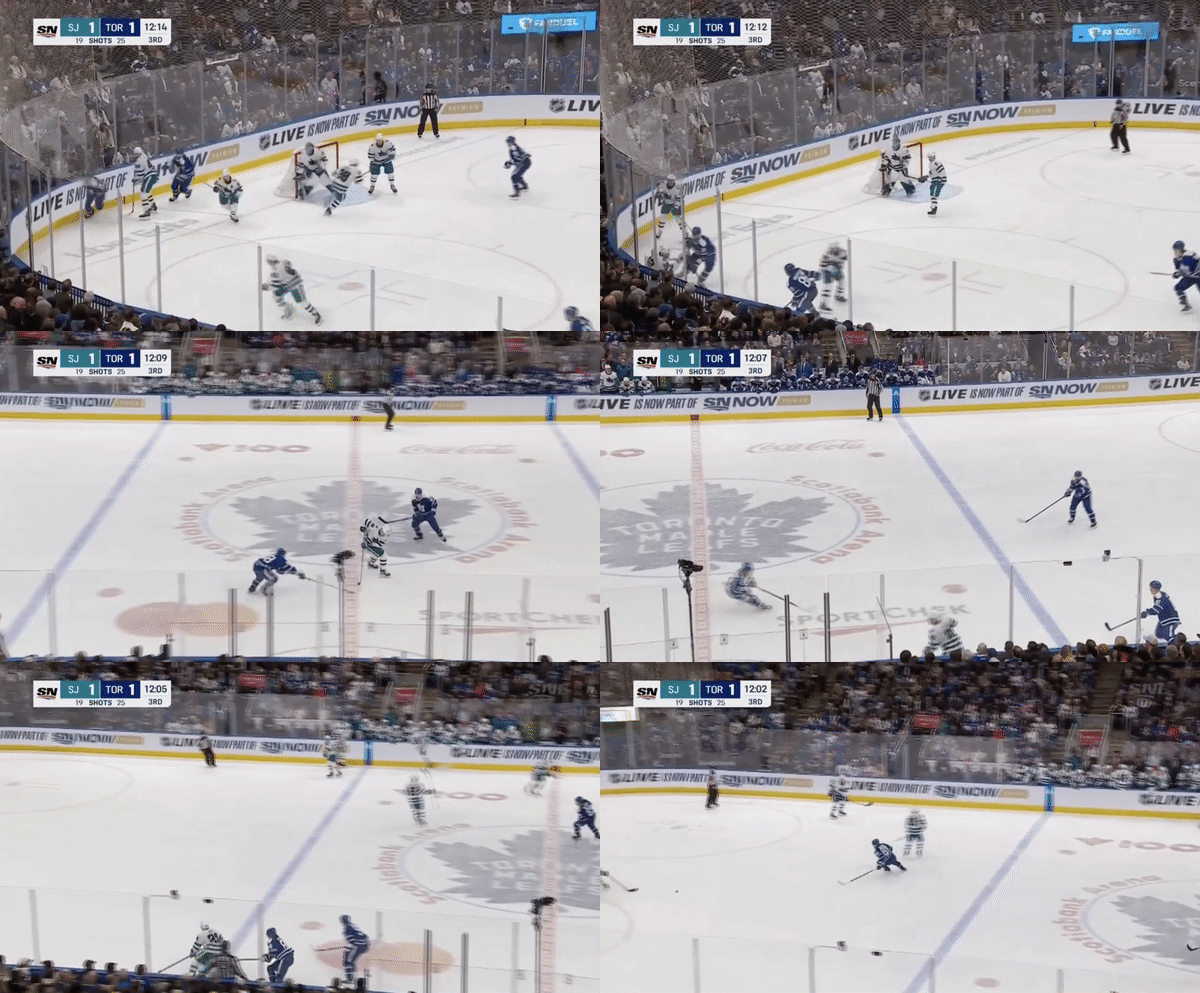
Kevin Labanc (62) makes an area pass that Meier (28) is able to knock down and control. Meier could go 1-on-2 and score a highlight reel goal – I wouldn’t put it past the star winger, who leads the Sharks with 2.77 Offensive Dekes Per 60 at 5-on-5, per SPORTLOGiQ, through the first quarter of the season.
But just as likely, Meier loses it to a Leaf.
So Meier, in a tied game, lives to fight another day. If the Sharks were down, it might be another story, and Meier might try to play hero. And that’s understandable, he’s good enough and paid to conjure a goal out of nothing.
But in this situation? It’s winning hockey to put your teammates, the next line, in an advantageous situation with possession of the puck. That’s what Meier does.
“We’re getting there,” Quinn said, when asked about the significance of this specific play.
We’ll see if the San Jose Sharks are indeed “getting there.” Hertl’s turnover suggests otherwise. But Meier putting his gun in the holster is a good sign.
Meier, by the way, often provides instructive examples of “good hockey” versus “winning hockey”.
By most measures, Meier is having a fantastic season. He’s scored 12 goals and 21 points in his last 17 games, and he’s on pace for what would be a team record 394 shots. As much as Karlsson, he’s the focal point of the Sharks’ offense.
No doubt, he’s played a lot of good hockey.
But sometimes, he forces the offense, which again, it’s understandable, but it was a real pleasure to see him hold back at a crossroads moment against Toronto.
This, for example, isn’t winning hockey from a really good hockey player.
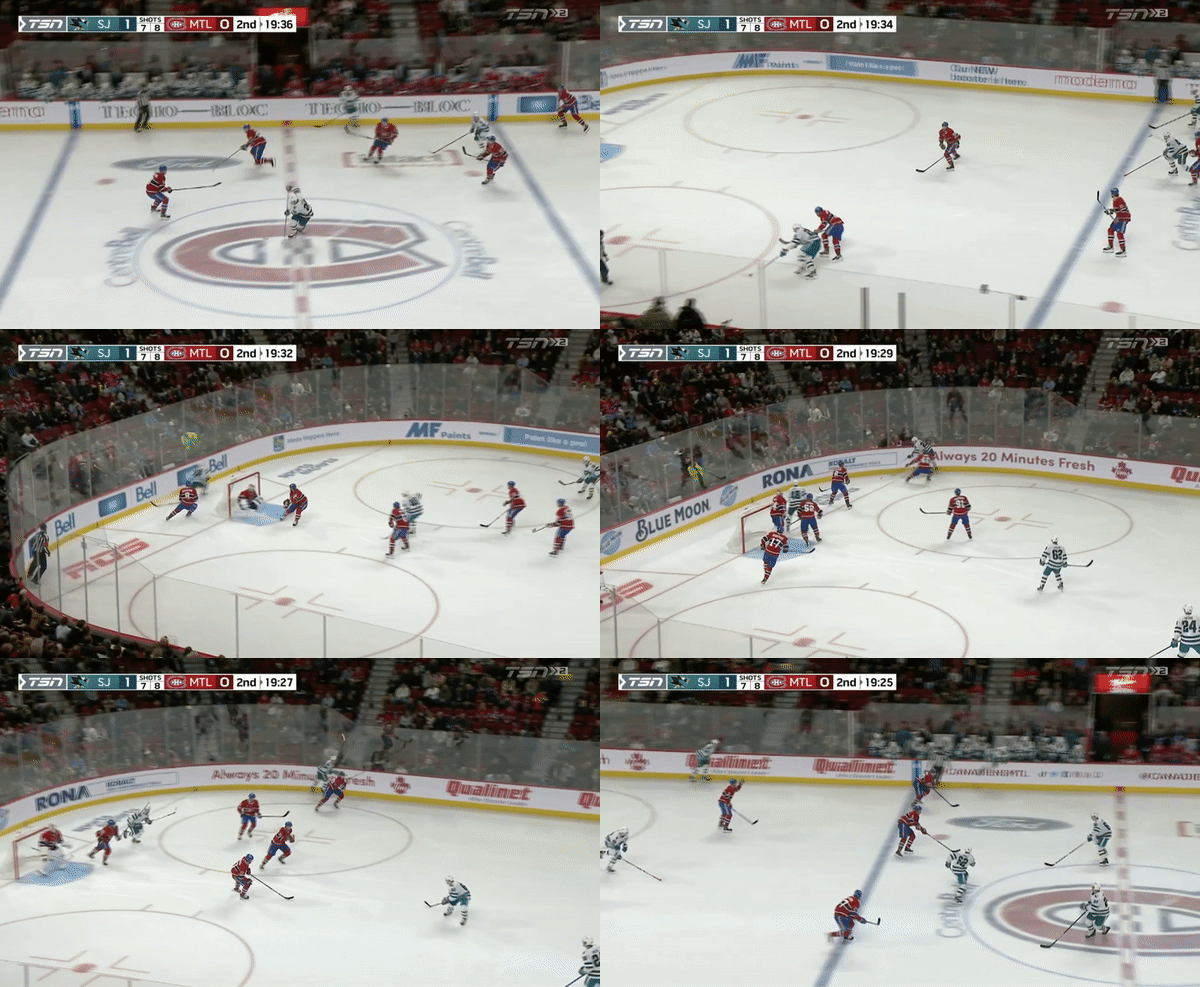
Meier, as he usually does, gains the zone with possession and backs off the defender, in this case, Mike Matheson (8). Behind the net, he’s looking for a play, that’s all good. But after fumbling the puck in the corner, it happens, he’s caught in no man’s land, Joel Armia (40) closing in.
Easy for me to say, but instead of a hope pass to Hertl (48), maybe Meier just eats the puck and absorbs the coming punishment until he can try a higher-percentage play to his linemate. Armia is strong, but of course, so is Meier.
Either way, a dead giveaway with no puck battle is the worst possible outcome. That’s losing hockey.
And obviously, the team, Meier included, made more than enough winning plays for San Jose to shut out Montreal 4-0 on Tuesday night.
It’s all an equation: Even the best team will make their share of losing plays. But a good team makes, on the balance, a lot more winning plays than losing ones over 82 games.
For the San Jose Sharks, the formula is simple: More winning hockey like Meier being smart and turning back the puck at the end of a long shift in a tied contest, less losing plays like forcing the puck through the middle when you’re not 100 percent sure.