The San Jose Sharks have re-shaped their player development program this summer.
“We’ll expand the analytics department, for sure. I think player development because it’s going to become a big part of the organization,” Mike Grier said on the day that he was introduced as the Sharks’ new GM. “We’ll definitely have some changes to the scouting department as well. It’s pretty much every part of the organization, we’ve talked about and looked into and are going to try and make better.”
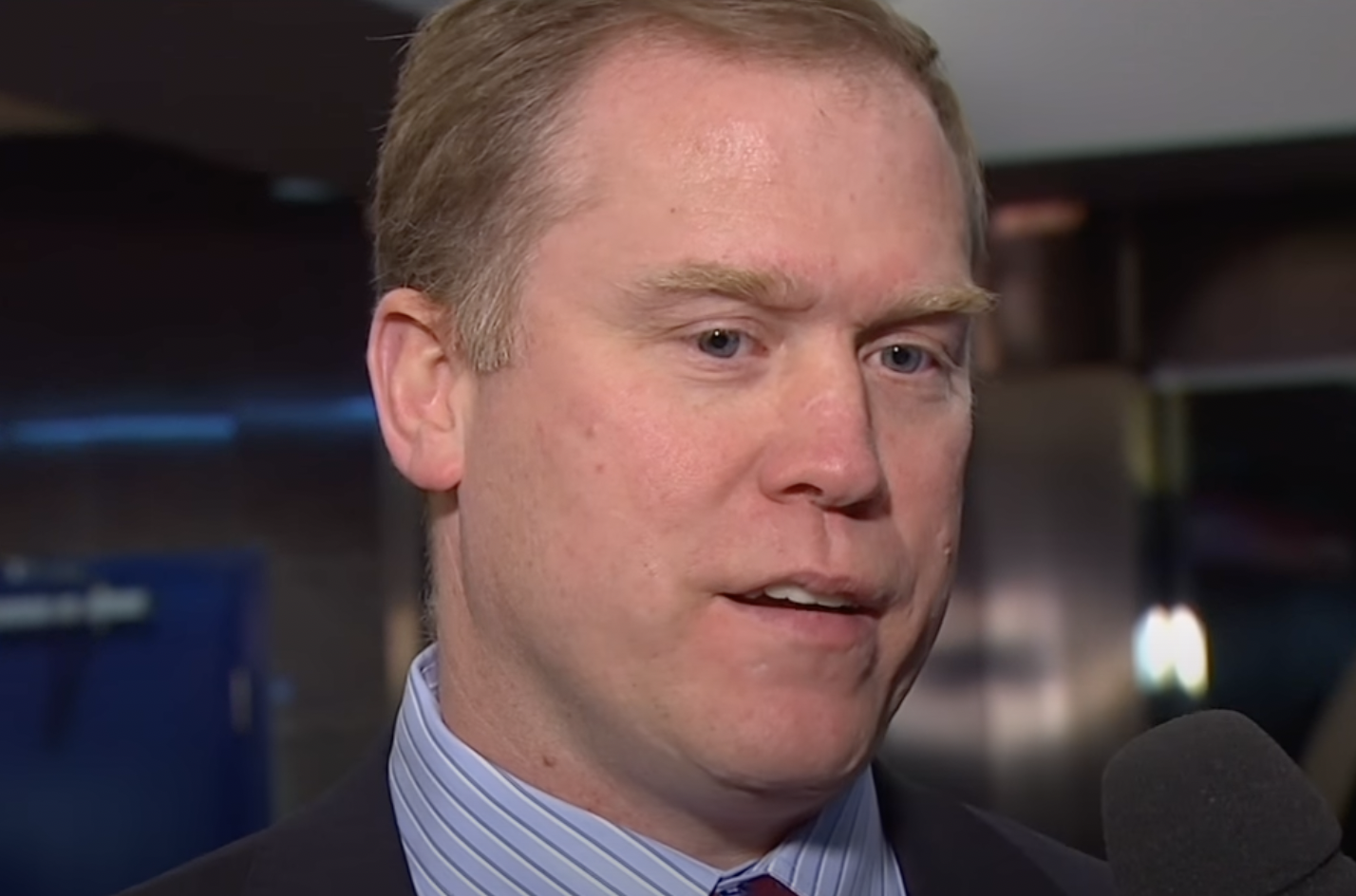
On the player development side, Grier hired Todd Marchant to be Director of Player Development. Marchant held that role with the Anaheim Ducks from 2011 to this past season.
Marchant enjoyed a distinguished playing career, suiting up for 1,195 games with the New York Rangers, Edmonton Oilers, Columbus Blue Jackets, and Ducks. He won a Stanley Cup with Anaheim in 2007. Marchant and Grier were also roommates and linemates with the Oilers from 1996 to 2002.
The Sharks have also hired fan favorite Tommy Wingels and Luca Sbisa as development coaches. Wingels and Sbisa will join incumbent development coach Mike Ricci, all under Marchant, to shepherd this generation of San Jose prospects to the NHL. Director of goaltending Evgeni Nabokov will stay in touch with the system’s netminders.
San Jose Hockey Now caught up with Marchant yesterday to talk about how the Director of Player Development role has evolved over the years, what’s the foundation of a strong development program, why he hired Wingels and Sbisa, and how duties will be divided between his three development coaches.

Sheng Peng: You were hired by the Anaheim Ducks and Bob Murray to be their Director of Player Development in 2011, shortly after you retired. Were you one of the first in that role in the NHL?
Todd Marchant: I don’t believe I was one of the first guys.
Actually, I think Edmonton [was one of the first]. Now that I talk to other teams, other people, a lot of teams back then might have had somebody, but it wasn’t as involved as it is today.
The salary cap was just new [back then]. It was only a few years in, teams were still trying to figure that out.
[Before that,] there was no salary cap. The big market teams, the Rangers, the Detroit Red Wings, and the Colorado Avalanche, they just spent whatever they wanted.
It did matter to develop and draft well, but you used those assets to get players that were already ready. Now in a salary cap, you can’t do that. You have to draft and you have to develop well, if you’re going to have any success.
You look at the teams that have been successful over the last 15 years, that’s how they built their team. They didn’t go out and get the high-priced talent, they built from within. That’s the Tampa Bay Lightning, LA Kings, Chicago Blackhawks. That’s the Pittsburgh Penguins. That’s how they were able to win their Stanley Cup because they drafted and developed well. That’s the formula for success in the NHL right now.
SP: How has the role of Director of Player Development evolved over the years?
TM: When I started in 2011, I did it by myself.
When you do a job like this and have to do it by yourself, it’s almost impossible. I will say that.
If you’re going to do it the way it needs to be done, you’re going to be on the road 25 days a month, in order to see all of [your prospects] and give them the time and the attention that they need. The last couple of years in Anaheim, I was able to bring on some other people to help in that role.
If you look at most organizations, they’ve got two or three guys that are running the player development department.
It just gives you more viewings of the players, it gives you more communication with the players. It lets the player know that they’re really interested, they really care about me. That’s one of the biggest things.
It’s not like we draft you, and then, we’ll talk to you in three years. That’s not how it works anymore. I mean, that’s how it worked when I was playing.
You’re investing time and money into these guys. You’re drafting them for a reason. Let’s help them get to the next level. No matter whether you’re a first-round pick, second-round pick, or a seventh-round pick, everyone matters. You may be a free agent, it doesn’t matter. They all matter. They’re all important, and they all can contribute to the success of your organization.
SP: What’s the foundation of a strong player development program?
TM: Communication. It starts with communication.
Sometimes, it’s just a text. Hey, how you doing? Hey, great game last night, I saw that you had a goal and an assist and you were plus-three. Or listen, you had a tough night, what do you want to talk about? Or do you want to go over some video?
Whatever it is, players today, they need that interaction.
I hate to go back in time, but [when I played], coaches would say my door’s always open. Well, it wasn’t open back then. If you walked in the coach’s room, it’s because you were told to walk in, you couldn’t just walk in there. Today, players today walk right in there like it’s no big deal.
[They] sit down in between periods and look at film. We weren’t allowed to look at film in between periods. They have iPads on the bench. Now [players] want to know instantly. And they want to know why. That’s the big question. Why are we doing this?
So you have to explain that to him. And once you explain it to him, and if it makes sense to him, then they have buy-in, and then you know that you’re on the right track.
Communication is imperative in this type of role, because if you don’t have good communication lines, it’s gonna break down.
SP: What do you look at when you’re hiring a development coach?
TM: The first criteria for me is that you had to have played in the NHL.
That’s imperative. What credibility do you have with a player if you go to see somebody, let’s say in the OHL, and after the game, you go down to talk to him and say, Hey, you can’t turn that puck over in that situation? Because if you do it in the NHL, you won’t play again.
Well, how do you know? You’ve never played there.
Then you have to be willing to communicate. I’ve been doing this for a while now. I’ve seen a lot of people get in.
They’ll get involved, they’ll start. Then after a couple years, they’re like that’s not for me. And they end up going in maybe a coaching route or do something else. And for some people, yeah, it is for me.
For me, the biggest reward that you can get in player development is to see a player drafted, watch him grow and mature, as a player and as a person, see them sign their contract, go through the American Hockey League, and then make it to the NHL. There’s no better feeling than seeing that progression.
I’ve been fortunate with Anaheim to see a lot of those players get drafted and mature and grow and eventually have families of their own and play in the NHL. They’re part of your family. They’re one of your children kind of thing.
SP: The San Jose Sharks are set to add Tommy Wingels and Luca Sbisa as development coaches, along with keeping Mike Ricci in that role. What do Tommy and Luca and Mike bring to the role?
TM: I played with Luca here in Anaheim. Then he retired and was looking to stay involved in the game. We brought him in and wanted to see whether it was something he really wanted to do. A lot of players are not quite sure what direction they want to go in.
Luca was just a natural. He’s a great communicator. He just left the game, so he knows what these players are going through, the ups and the downs. When his contract wasn’t renewed with Anaheim, it was a no-brainer for me.
I know Luca very well. He’ll work hard and he’ll do the job the way it’s meant to be done. I don’t have to train him, he knows how to do it.
As far as Tommy goes, I didn’t know Tommy at all. I talked to Mike [Grier] about building our development team. He said I got an e-mail from Tommy Wingels, maybe you should give him a call.
I was instantly impressed with the way that he sees the game, the way that he saw [the job] after I told him about what the job would entail. He was just so excited, he had energy. I love that.
I love someone that is super-excited about being a part of the organization and doing the job the way it’s supposed to be done.
He brings something to the table that Luca and I don’t, he was drafted by San Jose and played for San Jose. So he’s been in those shoes that those players are eventually going to be in.
It was a no-brainer as far as when I met with Tommy. We talked to a lot of other former players, former Sharks, but there was something about Tom that I gravitated towards.
Obviously [Ricci], I played against him for a long time. And he’s [been] in player development, so we talk about things. I see him at games and the rookie tournament or whatever. Reech has been around that organization a long time and in a development role, and he’ll continue to do that, working with our players in the Barracuda and with the big club.
He was the type of guy that filled a lot of roles as a player, whether it’s a penalty kill role or a faceoff guy or a power play guy. He did everything, played all different positions, in all different roles, on different teams. He played for San Jose, which is another positive, as well.
Let’s not forget that you got the director of goaltending in Evgeni Nabokov, another well-known Shark, who will be in charge of the goaltenders.
We’re well-rounded, we’ve got a lot of experience, and now it’s our job to pass our experience on to these young players.
SP: How will San Jose Sharks prospects be divided between Tommy, Mike, and Luca? With you kind of overseeing everything.
TM: Tommy will work with the forward [prospects], along with obviously Reech. Reech probably will spend more time with the players in San Jose and on the Barracuda. Tommy will focus mostly with the guys that aren’t there. Luca will focus on the defensemen.
We’re going to be on top of [our prospects]. My expectation is to see [each of] these players play anywhere from 10 to 15 times a year, amongst all of us. If you look at a college season, that’s half.
That’s just live, we’re not talking about any of the video stuff that we can do. The more information we can give these players, the better chance for their success.
SP: Finally, you were with the Ducks as Director of Player Development for over a decade. I know it’s hard to maybe pick just one, but were there a couple players that you’re just proud of, just in terms of what they overcame to make the NHL?
TM: I can’t really single out anybody.
I go back to my original group of players when I first started. Seeing Rickard Rakell, John Gibson, William Karlsson, Hampus Lindholm, Freddie Anderson, Shea Theodore, Brandon Montour, Ondrej Kase, Troy Terry, Josh Manson, Max Jones, I can just keep going on. These are all players that were originally drafted by Anaheim. Maybe they played on Anaheim for a little bit, went on to have or having great NHL careers.
The best part for me was sometimes I’d come back from a trip, I would walk through the [Ducks] locker room, and a player would come up to me and say where have you been? Who have you seen? Because they knew that I was out there seeing them when they were in juniors, in Europe, or in college.
You had a hand in getting them to that next level.
This year was one of the tougher years for me. We had three players that were originally drafted by Anaheim that were all unrestricted, Rickard Rakell, Josh Manson, Hampus Lindholm. And if you look back, they were some of my original players when I first started.
Being at the Draft when they got drafted, working with them whether it was over in Sweden with Hampus or at Plymouth with Rickard or at Northeastern with Josh, to see them leave the organization, go on somewhere else, it was tough. But that’s the business of the game.