
 Sheng Peng
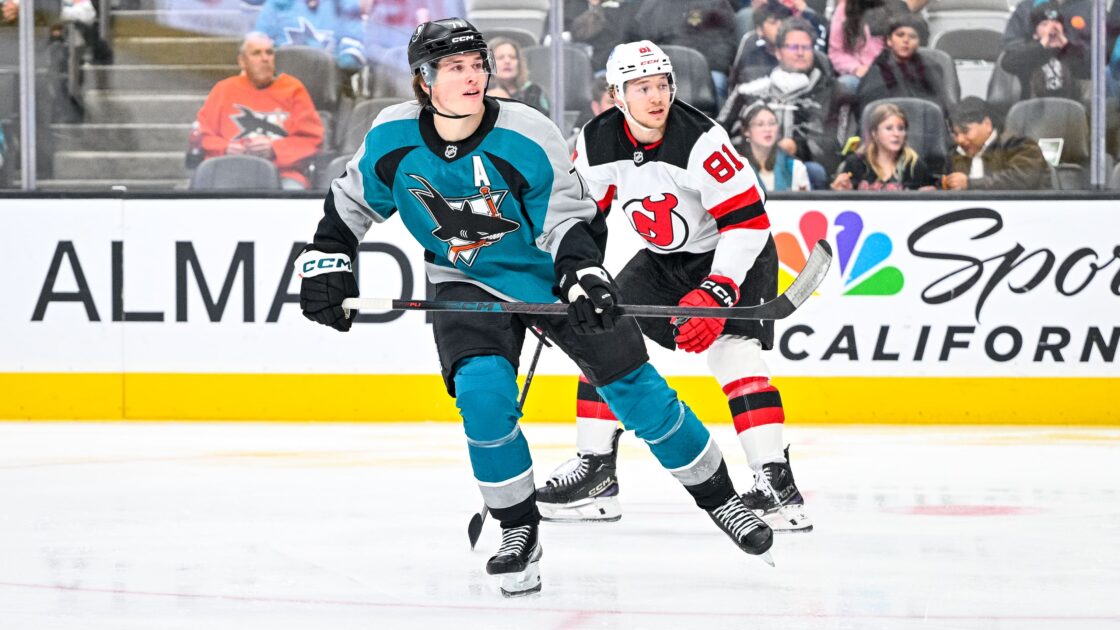
“We can skate with the best of them.”
The San Jose Sharks, four games into the season, had a tolerable 0-2-2 record. But in truth, challenging Ty Dellandrea’s statement, they were getting skated out of buildings.
One measure of this, from their 7-6 OT loss to the Anaheim Ducks, 5-1 defeat to the Carolina Hurricanes, and 6-3 loss to the Utah Mammoth, Games 2-4 of the season, the Sharks had a 32.3 Corsi For % at 5-on-5. Essentially, for every three of their own shot attempts, San Jose was giving up seven.
While Corsi isn’t a be-all, end-all stat, you don’t need the eye test to tell you three shots for seven is a bad trade.
So head coach Ryan Warsofsky and his coaching staff made a tactical adjustment that might have changed the course of the San Jose Sharks’ season.
Macklin Celebrini, Collin Graf, and Dellandrea also spoke to this adjustment.
On Oct. 18 against the Pittsburgh Penguins, the Sharks introduced a different, more aggressive neutral zone forecheck, the 2-1-2. This was in contrast to their previous NZ forecheck, the more passive 1-1-3.
Since then, San Jose has gone 3-4-0 with a far more competitive 49.8 Corsi For % at 5-on-5.
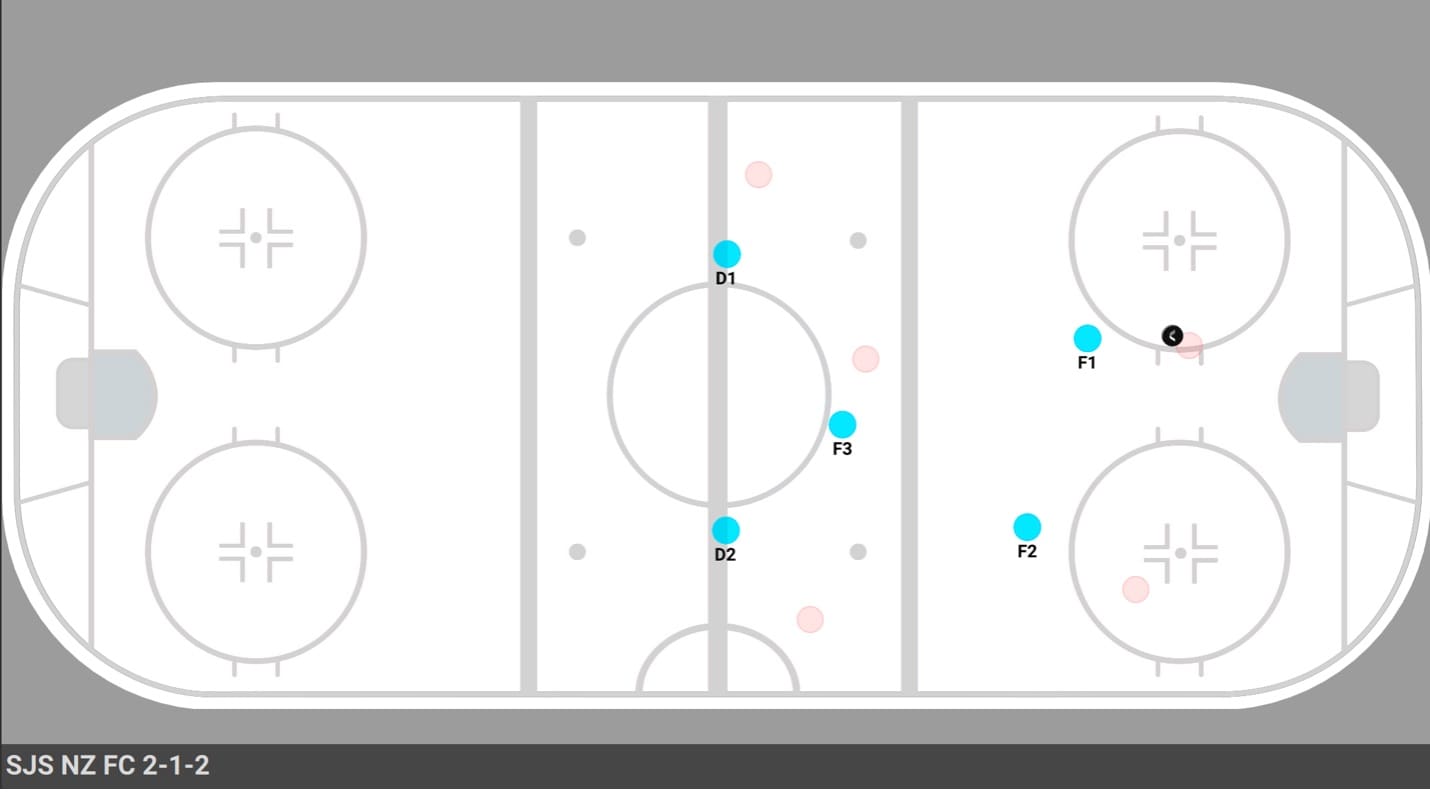
According to ex-AHL assistant coach Jack Han — subscribe to his Hockey Tactics Newsletter! — this is what the 2-1-2 looks like.
Graf cautioned this wasn’t the only reason for the Sharks’ improved play. And for sure, better puck management stands out as another reason, for example, to explain it.
That said?
“It definitely helps,” Graf acknowledged of the 2-1-2. “It helps just in terms of getting guys skating.”
“We need to be a team that’s in motion. It affects the rest of our game,” Warsofsky said. “So I think getting us skating has really helped us get on teams and take away time and space.”
“Getting on [the opposition], being aggressive,” Dellandrea added. “Instead of letting them make a mistake or letting them come to you, you’re forcing pressure on them.”
The effect?
“The more turnovers you can cause, you ask any player, they don’t like being under pressure,” Celebrini said. “The more pace and pressure we can put on the other team’s players or defensemen, helps us get more possession time.”
Here’s an example from Oct. 30 against the New Jersey Devils.
The front part of the 2-1-2, F1 Will Smith (2) and F2 Tyler Toffoli (73) apply up-ice pressure. The middle part of the 2-1-2, F3 Celebrini (71), takes the puck from Paul Cotter (47). The back part of the 2-1-2, Mario Ferraro (38) and John Klingberg (3) support. The San Jose Sharks get the puck back, and Celebrini finds Toffoli for a scoring chance.
Or as Han put it: “The 2-1-2 is a more aggressive scheme that aims to pressure the opposing team on their side of the center red line. F1 locks onto the puck carrier. F2 sprints to close the gap to the nearest teammate. F3 reads the play in the middle of the ice. The D’s gap up tightly to the opposing wide forwards.”
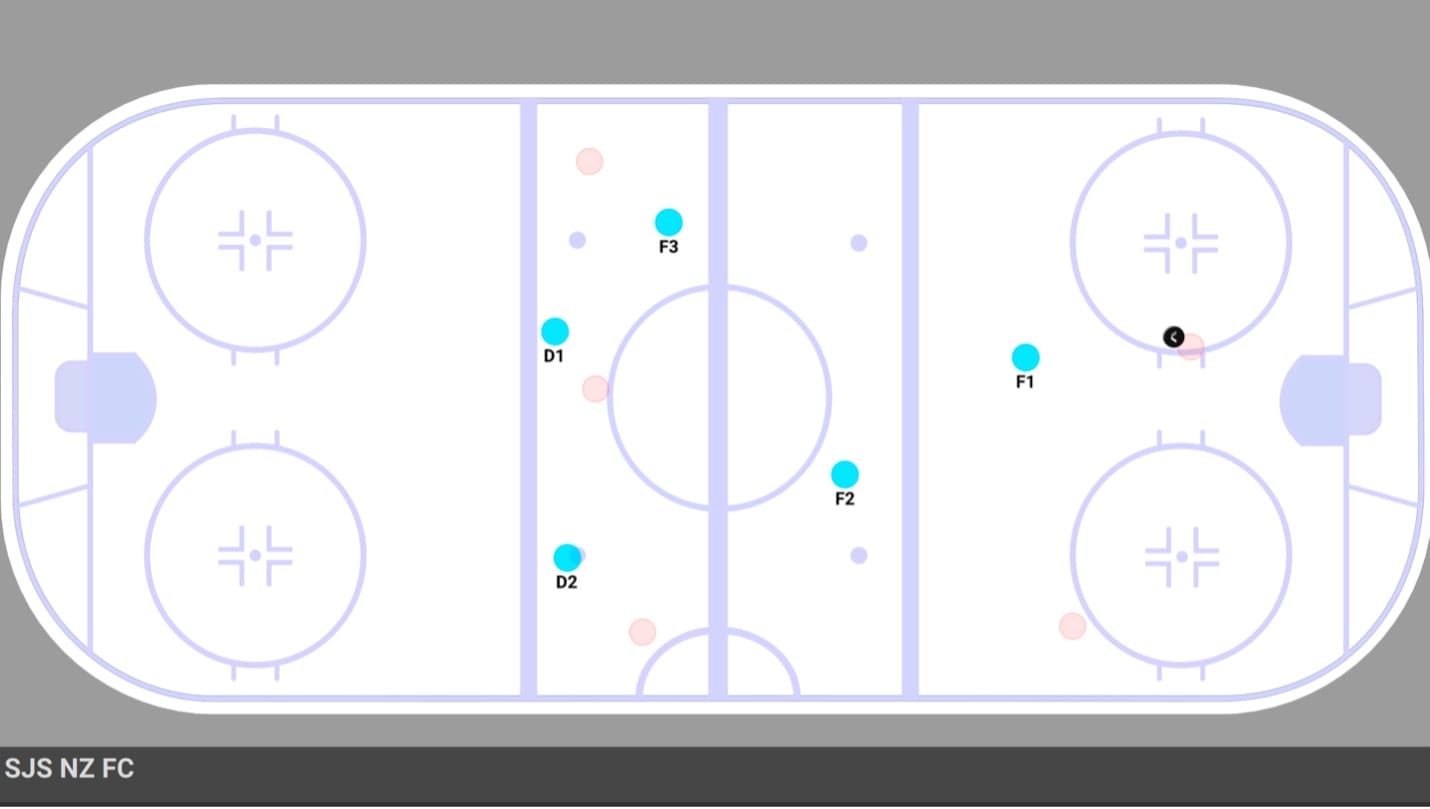
This is a more aggressive posture than the 1-1-3, which is pretty obvious visually:
“It helps, not sitting back as much, not giving them free entry,” Celebrini said.
“Obviously, there’s times for that more passive forecheck,” Graf said. “But if you can get on them real good, it’s obviously harder to make plays when you’re under pressure.”
For Warsofsky, making this tactical change so quickly in-season is also a mark of his improvement as a coach.
Last year, the brand-new head coach debuted with a more aggressive forecheck, and backed up by star goalie Mackenzie Blackwood, started the year 10-13-5. But then, San Jose traded safety net Blackwood, and from Dec. 9 to the 4 Nations Faceoff break on Feb. 8, the Sharks went 5-22-2.
Two months of bad hockey later, San Jose, also with less talent after trading Mikael Granlund and Cody Ceci, realized that they needed to play more defensively to survive the rest of the season.
“Last year, it’s funny, after the 4 Nations break, we went to the 1-1-3,” Warsofsky recalled, “and it really helped our team.”
The Sharks closed the season a more competitive 5-15-5, despite even less talent after dealing Jake Walman, Nico Sturm, Luke Kunin, and more at the Trade Deadline.
“As a coach, you learn what I think is important to me, may not be important to the team,” Warsofsky acknowledged, “and that’s something that we can continue to tinker with and get better at as a staff, and me personally.”
This year, it took just three bad games for Warsofsky to make this significant tactical change.
“As a coach, you need to know what makes your team tick,” he said.
Right now, this is a more talented Sharks squad than last year’s, and they can skate, so why not take advantage of that?
“We can all skate,” Dellandrea said, “a younger team on the forward front that can skate.”
“There’ll be times where we go back to that 1-1-3, and there’s instances when we do it throughout the game,” Warsofsky said, “but I think [the 2-1-2] helped us a lot in being able to skate more.”
These last seven games have been, arguably, the best two weeks of hockey that the Sharks have played in a few years.
“You could probably say that,” Warsofsky said. “We want to attack when we are in defense, and we want to attack when we’re on offense.”