
 Sheng Peng

If you think the New Jersey Devils are in trouble because of the two years, $18 million dollars owed to aging, declining defenseman P.K. Subban — welcome to San Jose.
The San Jose Sharks are tied to 30-year-old Erik Karlsson for seven more seasons and $80.5 million, 35-year-old Brent Burns for five more seasons and $40 million, and 33-year-old Marc-Edouard Vlasic for six more seasons and $42 million.
But in Subban perhaps, the San Jose Sharks can find hope for Karlsson, Burns, and Vlasic.
Ex-Toronto Maple Leafs hockey ops assistant Jack Han devoted a chapter to Subban’s poor 2019-20 campaign in his new book Hockey Tactics 2020, concluding: “I remain a Subban believer.”
So San Jose Hockey Now turned to Han, who we spoke to earlier today about being the first Chinese-Canadian behind an AHL bench, to gauge his thoughts about San Jose’s trio of highly-paid defenders.
Sheng Peng: What are your general thoughts about Erik Karlsson, Brent Burns, and Marc-Edouard Vlasic?
Jack Han: Once you get past 28, 29, 30, you have to be re-inventing yourself to to be competitive. Even though it looks like you’re treading water, you’re actually working really hard to add things to your game
We’re talking about Mark Giordano, Zdeno Chara, Kris Letang. To be elite past the age of 30 as a defenseman is really difficult because you’re losing foot speed and you’re never getting it back.
Brent Burns needs to have that foot speed to jump up into the rush so that he can outscore his mistakes. Same with Karlsson.
Vlasic uses his foot speed to match speed with guys like Connor McDavid, Leon Draisaitl, or Elias Pettersson.
He’s playing against these guys, if you don’t play tight to them, they’re going to use the gap and really exploit you. But you can only play tight if you have absolute trust in your speed and your ability to recover if your calculations are a little bit off.
The extreme case is Brent Seabrook, players who really go off a cliff. Because once you lose the foot speed, you generally don’t get it back. If you compensate by playing passively, you’re gonna get exploited.
The challenge for all three of these players is to find ways to stay limber, stay limber both physically and mentally.
So if the players or coaching staff can find ways to amplify their strengths. For Burns, it’s his shot and O-zone play. For Karlsson, it’s his breakouts and transition play. For Vlasic, it’s his ability to shut down, play well in the D-zone and PK. If they can do that, they’ll be good for the next few years.
They might be overpaid relative to their contracts because it’s a fact of life with the type of contracts that they signed. But at least they can be contributors.
SP: In your book, you expressed confidence that Subban would be able to evolve his game. Can you say, in order, your level of confidence that these San Jose Sharks defensemen can do the same?
JH: I might go Karlsson, Vlasic, then Burns.
When I watch Karlsson, the fundamentals of his game are still there. So it might be a matter of just dialing in some details. Vlasic, it’s going to be how well he can move. Whereas Burns, he has a lot of holes in his game. So it’s going to up to him and the coaches to maximize what he’s good at, minimize what he’s bad at.
Burns is also 35; P.K. is only 31. 31 to 35. That’s a big difference in NHL hockey. That’s mainly why I’m a little less optimistic about Burns. Father Time is undefeated.
SP: Okay, let’s talk more about Karlsson, Vlasic, and Burns individually. Can you elaborate more about Erik?
JH: His skill and smarts are still there. Overall, I think he has a few good seasons left in him.
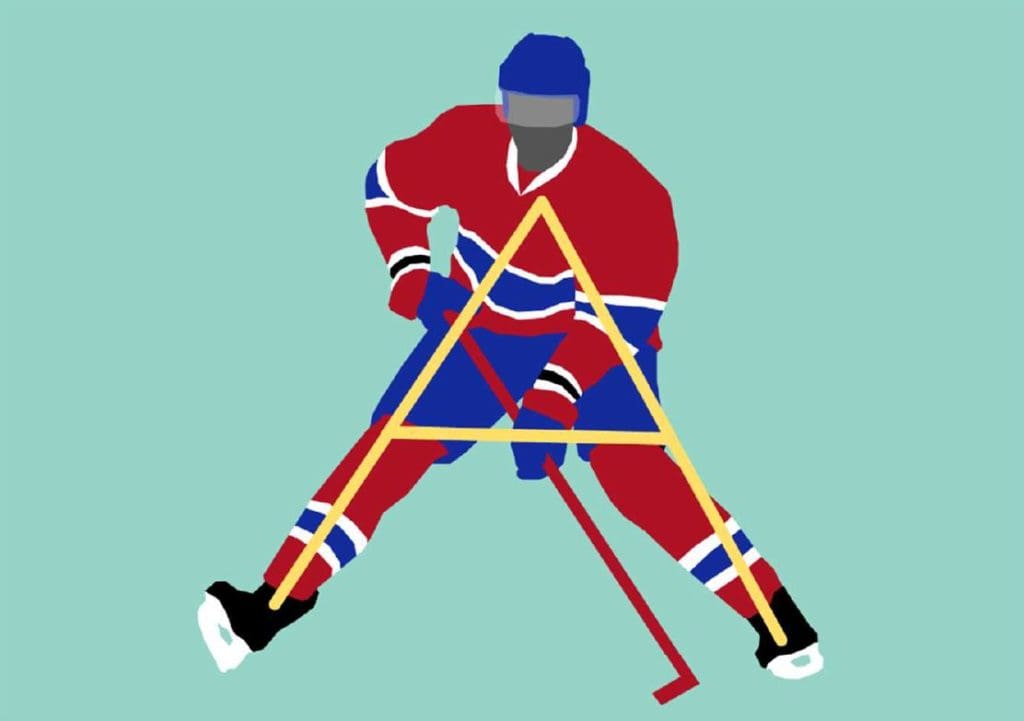
However, for someone known as a high-end skater, he’s actually quite uncomfortable shifting his weight onto his outside edges to protect the puck, evade checks, or make quick changes of speed or direction on defense.
Often he ends up in an A-frame — which you can see with Alex Galchenyuk [in my book] — which can become a problem as he ages and loses his natural pace.
Priority one is to get him healthy and moving well. The rest will take care of itself.
SP: Marc-Edouard Vlasic?
JH: The problem with a lot of defensive defensemen as they age is that they become content to only not get beat. As a result, they A) leave a lot of offense on the table and B) play in the DZ more often because they let the other team possess the puck.
Vlasic’s defensive reads and positioning are still excellent. But his skating posture suggests to me that he is breaking down physically. It doesn’t allow him to jump on the puck as quickly and make as dynamic a first play than in years past. Now, most of his DZ touches end up as a clear or an indirect pass to a teammate on the wall, which really reduces the Sharks’ potential to transition the puck with speed and penetrate into the OZ.
SP: Finally, Brent Burns?
JH: That shot is always going to be a factor and I still see his ability to get up into the play.
The big challenge for him is to improve his defensive footwork. He is very exploitable off the rush when he has to pivot from backward to forward skating. You can force him to back up behind his blueline and beat with with a play in the middle of the ice, through him and his partner.
The solution would be for Burns to play tighter to his partner, which I discuss in my book, and also angle his check skating forward as often as possible when defending the rush. Kevin Shattenkirk has been extremely successful by avoiding skating backwards at all costs even when he is defending. Burns would do well to copy that approach.